
Regulator RFQ: Phase Count and Architecture Before MOSFET Labels
Separate generator phase count, regulation architecture and exact module identity before comparing a motorcycle regulator replacement.
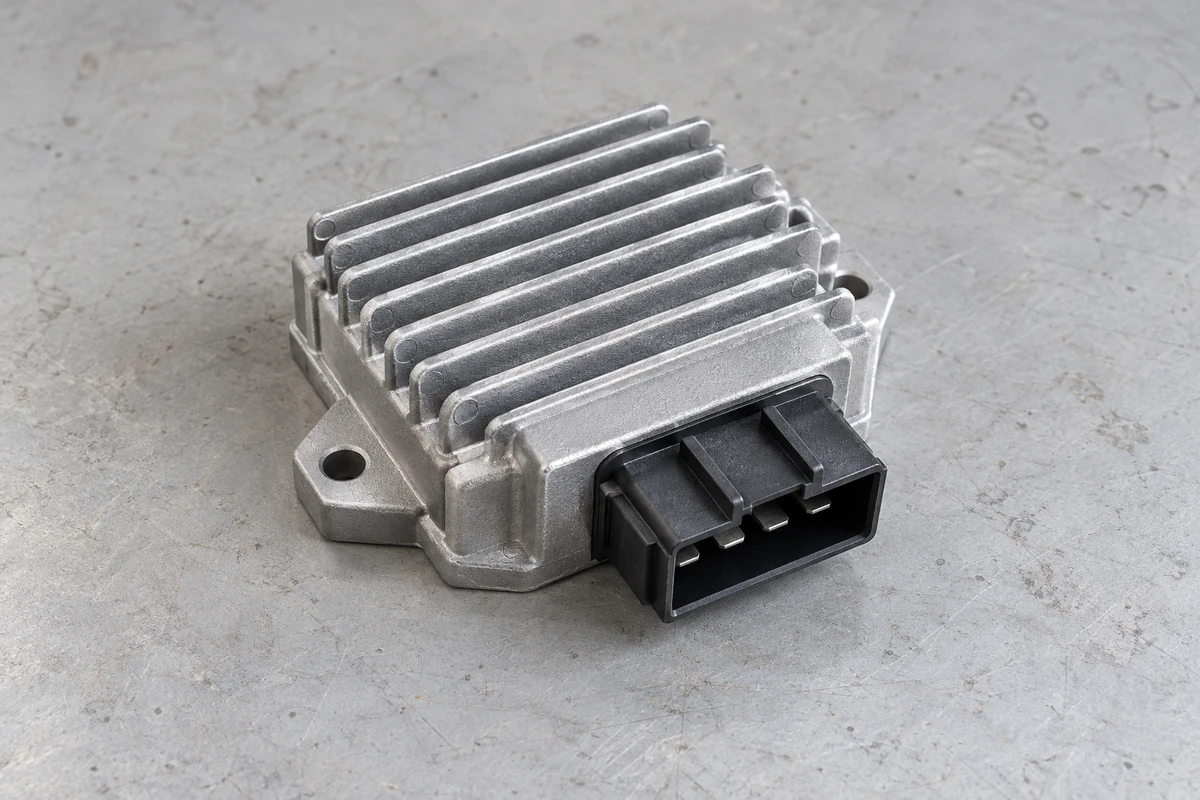
A MOSFET label is an incomplete description of a motorcycle regulator. A regulator RFQ should establish the generator arrangement and required regulation architecture before treating a similarly shaped module as a replacement candidate.
The buyer needs a documented electrical application, not a ranking of marketplace technology words. Keep the actual charging-system record and the exact offered module together. If the system has been modified, its present approved configuration must be resolved rather than inferred from the vehicle's original model name.
Separate the classifications
Shindengen's regulator range distinguishes single-phase and three-phase products, open and short regulation, and several FET-related configurations. This demonstrates that phase count, regulation approach and component technology are separate descriptions. It does not provide a universal pinout or establish interchangeability between products carrying a MOSFET label. Shindengen regulators and rectifiers
Give each classification its own line in the supplier request. A response that states 'three phase' has answered a different question from one that states a regulation architecture. A technology claim does not fill either blank automatically.
Avoid claiming an efficiency improvement or reduced heating for an unidentified candidate. A manufacturer's description of its own design cannot establish those outcomes for another supplier's module. The useful response identifies the exact product and its applicable technical documentation.
Identify the installed electrical baseline
Ask the vehicle maker or qualified electrical service provider for the applicable charging-system reference and approved replacement requirement. Record the generator identity, regulator reference and any documented harness or system changes. A connector photograph is supporting identification material, not an electrical specification.
Request the offered module's interface documentation against the baseline, with each unresolved function or connection left visible. Do not infer pin functions from housing shape, wire colors or a familiar plug. This is a document request; it does not call for probing live circuits or trying several wiring arrangements.
A seller may offer an assembly with adapters or a different arrangement. Classify that response as a changed integration proposal, with its own evidence and responsible approval owner. It has not answered an unchanged-module request merely because the package can be connected mechanically.
Two fictional MOSFET offers
Imagine an approved requirement identifying both phase count and regulation architecture. Offer A says only 'MOSFET replacement' and supplies a product photo. Offer B identifies the phase count and exact module but leaves the required architecture undocumented.
Ask A for its complete technical identity before comparing it. Ask B for the applicable architecture evidence and the remaining system interface record. B's fuller answer narrows the gap, but it is still not an accepted alternative. The buyer should not borrow an architecture description from a visually similar manufacturer's product to complete either quotation.
If a later document establishes that B uses a different architecture, preserve that as a proposed system change. It must not be relabeled as a matching product just because it has a favorable price or familiar technology.
Make commercial comparisons conditional on technical scope
Supplier negotiation can seek a clearer quotation and affordable independent aftermarket candidates. It cannot supply missing electrical approval. Record the price and terms alongside the exact module reference and its outstanding questions so that a commercial shortlist is not mistaken for a fit shortlist.
Ask for substitutions to be disclosed before order release. Retain the technical provider's decision for the particular vehicle configuration; do not transfer it to every motorcycle using a similar engine. This worksheet does not authorize rewiring, live testing, removal of required functions or charging-system modification.
A product-specific quotation worksheet
| Field | Record and request | Keep unresolved |
|---|---|---|
| Vehicle electrical reference | Applicable current system document and configuration | Model or engine family alone |
| Generator phase count | Source-backed requirement and offered classification | Phase count inferred from a plug photo |
| Regulation architecture | Required approach and exact offered evidence | MOSFET used as the complete architecture |
| Module reference | Maker and full product designation | Anonymous replacement label |
| Documented interfaces | Applicable system and module records | Wire color or connector shape used as pinout |
| Technical reviewer | Provider owning acceptance and remaining questions | Commercial shortlist treated as fit approval |
Use this original purchasing worksheet to record the supplier’s actual answers. It is not a test procedure or fit certificate; unresolved safety-sensitive application questions require exact product evidence and confirmation by the responsible provider.
Prepare a sourcing request
Use the Scooter parts category for the product group and the Motoparts sourcing request for the exact item and unanswered question. Keep any affordable aftermarket or unbranded alternative tied to the authorized application or released drawing. Motoparts is an independent buying agent for aftermarket and unbranded parts; a request does not establish supplier manufacturing capability, guaranteed savings, branded affiliation or technical approval.
The initial form accepts a description of 8–1200 characters and up to five PNG, JPEG, WebP or GIF images, limited to 10 MiB each and 20 MiB total. Authorized drawing images may start a customization enquiry. CAD, PDF and ZIP files require a separately agreed authorized exchange; the image field is not a technical-file portal.
Frequently asked questions
Does MOSFET identify the required regulator architecture?
No. Request the phase count, regulation approach and exact module evidence independently. The label alone does not answer the charging-system application.
Can matching plugs establish regulator interchangeability?
No. Preserve the applicable electrical and interface documentation for the actual vehicle and offered module. A mechanical resemblance cannot determine circuit functions.
What if the offer includes a wiring adapter?
Record the changed arrangement as a separate integration proposal for responsible review. The adapter does not establish that the module preserves the approved electrical system.
Can a cheaper regulator be shortlisted before all evidence arrives?
Its commercial terms may be recorded, but its technical status must stay unresolved. Do not describe it as a compatible or accepted alternative until the required application evidence and provider confirmation are complete.
Sources
Discuss a sourcing request related to this article.Regulator RFQ: Phase Count and Architecture Before MOSFET Labels