
Motorcycle ECU Service Freight: Original and Replacement Scope
Identify who supplies the replacement controller and the return obligation for each unit before pricing a lawful owner-authorized ECU service.
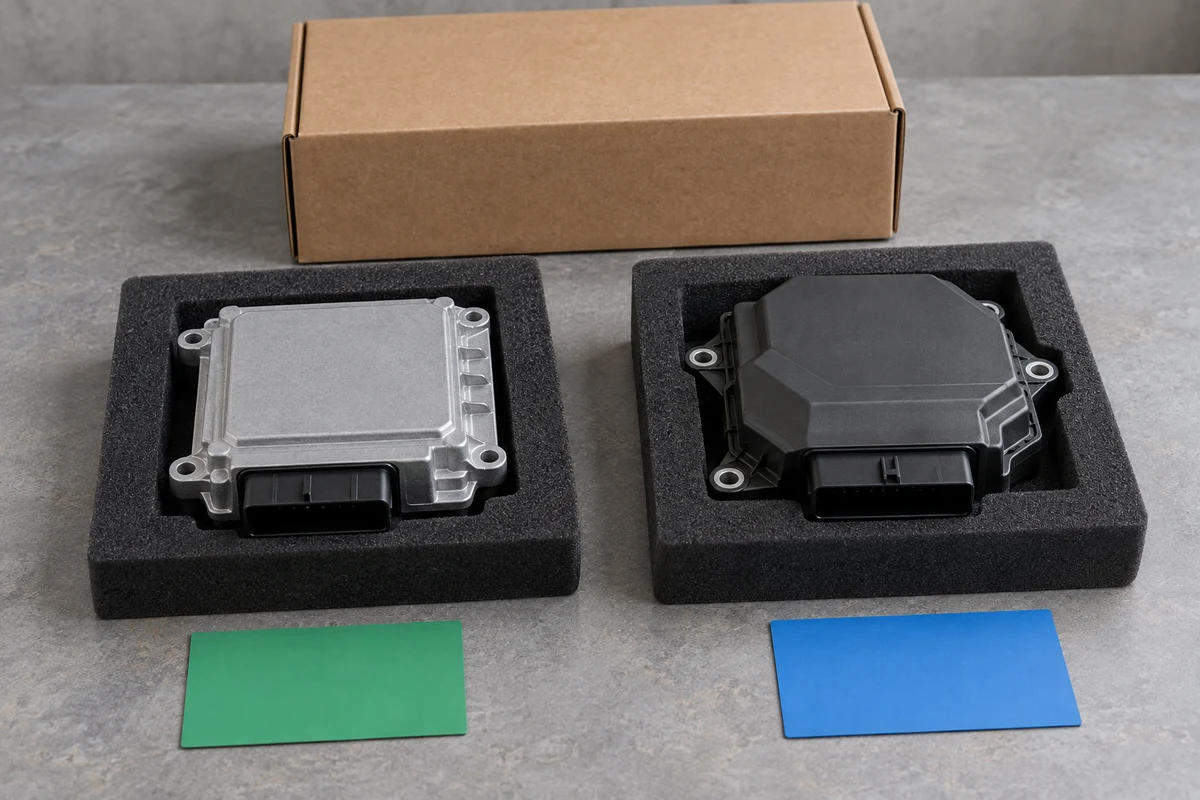
Before comparing motorcycle ECU mail-in service and return shipping, establish who supplies the replacement controller. One offer may require the owner's original plus an owner-supplied replacement. Another may receive the original and supply a new controller as part of the purchase. Those are different physical supply obligations before any freight is priced.
For lawful, owner-authorized service, identify the original and replacement separately and agree what happens to each unit. A line saying return shipping does not necessarily identify every asset expected back. This article concerns physical supply, custody and commercial freight scope only.
Compare the two supply structures first
SSS Motorcycles' named Bosch MSE6.0 service page states that the customer sends the original, a new ECU is included, and both original and new units are returned. Its published scope therefore describes one owner-supplied input and two returned controllers. This is an observation about that named CFMOTO/Bosch service, retrieved on 14 October 2026. SSS Motorcycles named MSE6.0 service
Apex Auto Electrical's named Siemens/Continental M3C page instead asks for the original and the replacement unit. It also states that return postage is excluded from service pricing. That describes a customer-supplied replacement structure. Its general return-shipping wording does not explicitly settle the original unit's return for an actual job. Apex Auto Electrical named M3C service
These are different products and service geographies, not interchangeable offers for the same motorcycle. Neither source establishes eligibility for the reader's controller or international route. No technical-success, readiness, timing or road-use assertion from either page is adopted here.
For the actual enquiry, ask whether the quoted purchase includes another physical controller or only a service involving hardware supplied by the owner. An unanswered replacement-hardware line cannot be entered as zero cost or assumed included because another provider supplies one.
Name the original and replacement by role
Use original/source unit for the owner's existing controller and replacement/recipient unit for the separate hardware involved in the authorized service. These labels describe the commercial roles in the record. They do not establish technical interchangeability.
Ask the provider to connect its terminology to those roles. If a quote says donor, clarify which physical unit it means rather than using the same word for both. Copy existing part-label references and ordinary job identifiers accurately; do not request security codes, keys, credentials or extracted electronic data for the purchasing ledger.
Identify the owner and supplier of each controller. If the provider will supply the replacement, record the exact proposed hardware scope and when its identity will be supplied. If the customer must supply it, keep that separate purchase and its provider acceptance visible. A description of the original does not fill an unidentified replacement line.
Agree the unit-by-unit return obligation
For each unit, record the owner's expectation and the provider's accepted obligation. An expectation that the original will come back should be answered explicitly before the owner commits property. Do not present that expectation as an automatic legal entitlement under every service arrangement.
The SSS example expressly includes both returns. For another service, obtain its own answer. In particular, do not infer Apex's original-unit disposition from its paragraph about return postage. The response should identify which unit or units are returned, the recipient for each and any proposed retention.
If the provider proposes retaining an original, state that as a distinct proposal for the owner's decision. Preserve the accepted terms rather than assuming the original becomes a surrendered exchange core. No core credit, deposit or exchange discount follows from the mere fact that a replacement controller is involved.
Also request the property outcome if the agreed service cannot proceed. The important question here is what happens to the identified original and any separately supplied replacement hardware. Keep each proposed return or retention tied to the actual agreement without predicting service success or inventing a failure charge.
Match the movement record to the supplied hardware
Write separate outbound and return unit lists. Under a provider-supplied replacement structure, the owner's outward movement might contain one controller while the agreed return contains two. Under a customer-supplied replacement structure, two identified controllers may be required at intake. Use the actual provider's accepted list.
Physical unit count is not parcel count. An additional returned controller does not automatically mean another package, a particular packing method or an extra transport charge. Ask the responsible provider for the actual package basis and quote that corresponds to the agreed return contents.
Keep included return carriage distinct from excluded or unquoted carriage. Request the named receiver, commercial scope and payer for each actual movement. Do not use the outward package assumption to price a return with different contents, or import a domestic service description into an unaccepted international journey.
Use a two-unit custody ledger
This original purchasing aid keeps the replacement purchase visible rather than reducing the job to a generic service return:
- Lawful owner authorization and exact provider/service reference
- Original/source unit identity, owner and outbound custodian
- Replacement/recipient unit identity or unresolved reference, owner and hardware supplier
- Hardware included in the service purchase versus separately supplied by the customer
- Outbound unit list and provider acknowledgment
- Accepted return or retention obligation for each unit, including a declined-service outcome
- Actual recipient, package basis, freight inclusion and payer
- Returned identities and any separate unresolved technical outcome
Keep a pending replacement identity visible until the responsible provider supplies it. Do not make up a matching serial number to complete the ledger. If a later hardware substitution is proposed, obtain the required owner and provider decisions and update the commercial record before relying on the earlier freight scope.
Fictional example: one input does not define the return
Fictional job E-41 requires original unit O-41 at intake and includes a provider-supplied replacement in its purchased scope. The initial quote says return shipping but does not itemize what will be returned. No actual transaction or successful service is represented.
The buyer asks the provider to identify the replacement supply and confirm the obligation for O-41 as well as the replacement. Until that answer arrives, the return is not described as a confirmed two-unit handback. Nor is O-41 treated as an exchange core.
If the provider confirms both units, the buyer asks for a quote based on those contents without assuming two parcels. If the provider proposes retaining O-41, the owner must decide that changed obligation explicitly. The example closes only the supply and property questions that receive real answers; it predicts no technical result.
Reconcile property without certifying operation
At return, match the provider's contents record and received identities to the accepted two-unit ledger. A discrepancy may concern the original, the replacement or the scope promised; name it precisely instead of reporting only that the ECU came back.
Receipt can close a physical handback while suitability and authorized use remain with the responsible technical provider. This purchasing record gives no programming, cloning, immobilizer, key, wiring or installation instructions. It does not authorize performance work or establish software rights, operating safety or road legality.
See Motorcycle parts for product context. A Motoparts sourcing request can describe an unresolved hardware-supply or supplier-record question within independent aftermarket and unbranded buying coordination. The cited services are documentary examples, not Motoparts affiliations, branded-supply commitments or ECU-service capability claims.
Frequently asked questions
Does an ECU mail-in service always include a replacement controller?
No. The named SSS MSE6.0 example includes new hardware, whereas Apex's named M3C page asks for a customer-supplied replacement. These concern different products and are not same-motorcycle alternatives. Ask the actual provider what hardware its offer includes.
Does return shipping mean my original ECU is definitely coming back?
Not necessarily. Record the owner's expectation and obtain the provider's accepted obligation for each physical unit. SSS expressly describes both returns; Apex's general postage wording does not settle its original-unit disposition for an actual job.
Does one original sent and two controllers returned mean two return parcels?
No. Unit count and parcel count are different. Obtain the provider's actual package basis and freight inclusion for the agreed return contents. Do not infer a second parcel, packing method or extra rate from the additional controller.
Can the custody record confirm technical success or authorize other ECU work?
No. It accounts for hardware supply and property handback within lawful owner-authorized service. The responsible technical provider separately addresses eligibility and authorized use. This record supplies no technical procedure and does not approve tuning, security changes, software-rights workarounds or road use.
Sources
Discuss a sourcing request related to this article.Motorcycle ECU Service Freight: Original and Replacement Scope