
AGM Handover: Identify Evidence of the Initial Charge
After the battery’s supply and activation provenance are established, distinguish fill-and-seal evidence from the separately documented initial charge.
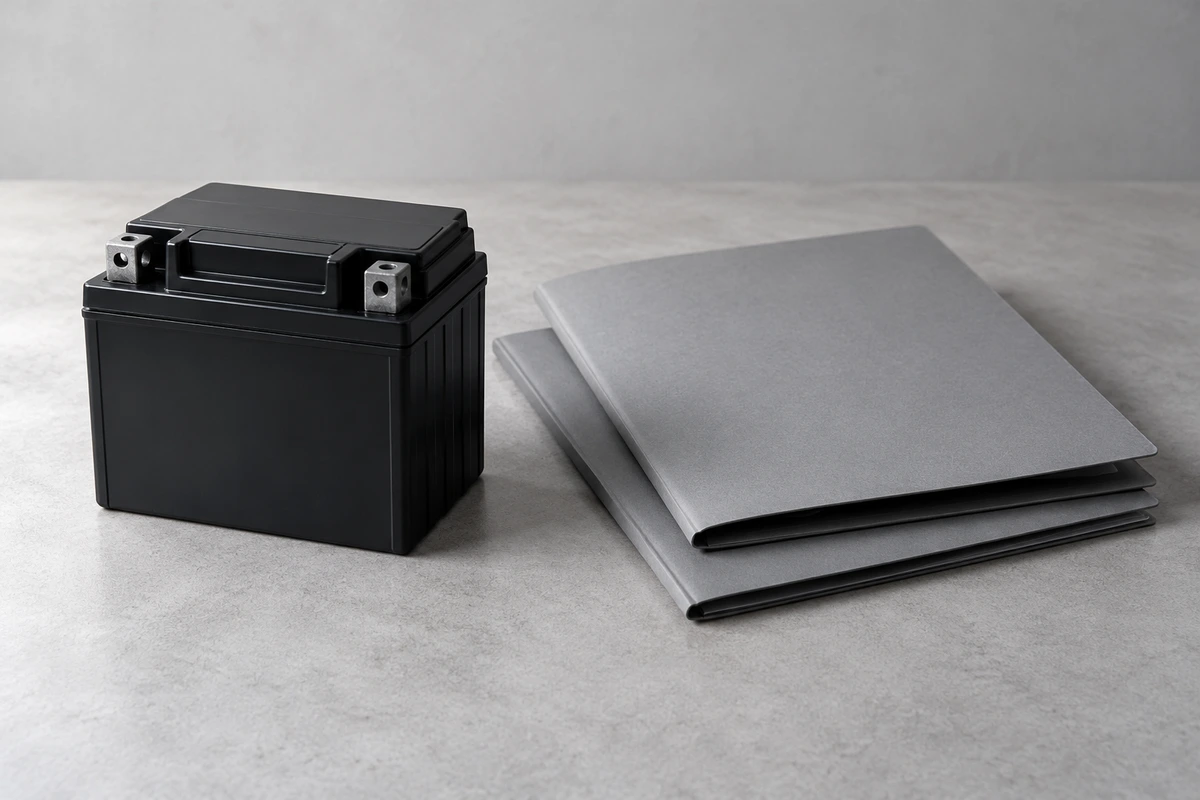
An AGM handover can establish who filled and sealed a bottle-supplied battery without establishing the initial-charge step described by its maker. Ask what the provider's “activated” statement actually includes before closing the agreed preparation record.
This question starts after battery identity, ordered supply state and activation provenance have been reconciled. It does not reopen a receipt discrepancy or authorize electrolyte handling, charging, electrical testing or installation.
Why a completed fill record can still be a partial preparation record
Yuasa's AGM guide distinguishes factory-activated and bottle-supplied products. In its bottle-supplied discussion, the initial charge remains part of completing the described activation process after electrolyte activation; the latter alone does not establish a full initial charge. This bounded distinction was checked on 14 October 2026. Yuasa AGM activation guide
Keep the source's scope intact. A factory-activated product is described differently, and another maker's battery needs its own applicable instructions. This article gives no charge level, charger specification, voltage, duration or method. The actual qualified provider must determine what applies to the identified battery and service event.
Ask what the activation declaration covers
Retain the resolved unit or batch association, maker/model and provider's activation-event reference. Ask the author whether its declaration covers only the filling/sealing stage or the complete preparation scope it was contracted to supply. Do not decide from the word activated alone.
If the provider states that initial charging was completed, request the existing attributable job record and the applicable instruction reference. The useful response connects this battery or defined group to the claimed event and outcome. A general charger brochure or a photograph of equipment at the workshop does not supply that association.
Keep group coverage explicit. A statement for a clearly identified group can be retained at that scope; it should not be expanded to unlisted units on the same delivery. No serial-number system or specific recording technology is assumed by this article.
Separate initial preparation from later state
The initial-charge event is historical. A later charge, storage-maintenance entry or current condition statement may be useful, but the provider must explain its relationship to the original preparation obligation. Do not rename a later event to close a missing earlier record.
Similarly, the passage of time after filling does not create evidence that charging occurred. A sealed exterior and a dispatch date answer different questions. Preserve the actual sequence stated by the provider and leave any unknown event unknown.
If the technical owner concludes that additional work or assessment is required, retain it as a separately authorized scope. Purchasing should not ask the receiver to connect a charger or obtain a new voltage reading to resolve an administrative gap. Any suspected hazard belongs to the established qualified response, ahead of further documentation requests.
Initial-charge evidence worksheet
| Field | Evidence to retain | Documentary decision |
|---|---|---|
| Established battery state | Exact product and resolved FA/BS or maker terminology | Which preparation context applies? |
| Activation declaration | Attributable event and stated coverage | Fill/seal only or broader completed scope? |
| Initial-charge requirement | Applicable maker instruction and technical owner | What obligation is being accounted for? |
| Completion evidence | Existing unit/group-linked provider record | Does it evidence that specific event? |
| Later charge or care | Separate event and purpose | Is later history being substituted? |
| Remaining scope | Missing evidence versus work outstanding | Who must clarify or authorize the next step? |
The worksheet is an original evidence aid. It is not a charging log template prescribing technical values or a ready-for-service certificate.
Fictional case: “activated” meant filled
Imagine a fictional bottle-supplied battery whose activation provider and authorized fill event are already established. The handover email says “activated before dispatch.” When asked, the provider explains that this phrase covered filling and sealing, while a different business was expected to handle the remaining preparation.
The buyer records the declared boundary and asks the commercial and technical owners to identify the actual remaining scope and responsible provider. It does not infer that the work was included without charge, and it does not treat a dispatched battery as ready for use.
If an existing initial-charge record is later found, link it to its actual event and battery coverage. If no record exists, distinguish “completion unestablished” from “provider confirms work outstanding.” Both are more precise than a single preparation-complete tick.
The battery-specific reason for this handover is the difference between electrolyte activation evidence and the initial-charge obligation. It is not a generic request for more completion paperwork: the record must say which stage the word activated covers. Closing that distinction still does not establish present condition or vehicle readiness.
Send a focused purchasing enquiry
See Motorcycle parts for category context. A Motoparts sourcing request can identify the actual product and the specific missing provider answer. Motoparts offers independent aftermarket and unbranded buying coordination and supplier negotiation. Manufacturer examples here imply no affiliation, branded-goods offer, specialist-service capability, fit guarantee or engineering approval.
The initial form accepts a supported marketplace HTTPS link, an 8–1200-character description or screenshots. Images are limited to five PNG, JPEG, WebP or GIF files, 10 MiB each and 20 MiB combined. PDF, CAD, ZIP and other technical files need a separately agreed authorized exchange; the image field is not a technical-file portal.
Frequently asked questions
Does an “activated” label always prove initial charging is complete?
Ask the provider what the declaration covers. For the cited bottle-supplied Yuasa context, electrolyte activation alone does not account for the full initial-charge step. Preserve the exact product and event rather than applying one label universally.
Does this create a new charging task for every factory-activated AGM battery?
No. The maker describes factory-activated products separately. The qualified owner must establish the actual requirements and history; this article does not impose an additional procedure or provide operating values.
Can a later charging record replace missing initial-charge evidence?
Keep the later event under its actual date and purpose. Ask the responsible provider how it relates to the agreed preparation scope. It cannot be silently backdated or relabelled as the original event.
Should the receiver test or charge the battery to close the file?
No physical or electrical work is authorized here. Request existing provider evidence and a qualified disposition of the gap. Further work, if needed, requires its own appropriate technical scope and authorization.
Sources
Discuss a sourcing request related to this article.AGM Handover: Identify Evidence of the Initial Charge