
Motorcycle Tire Receipt: Separate Age and Storage Evidence
Check an agreed tire-age requirement alongside storage history, keeping date evidence separate from condition and specialist assessment.
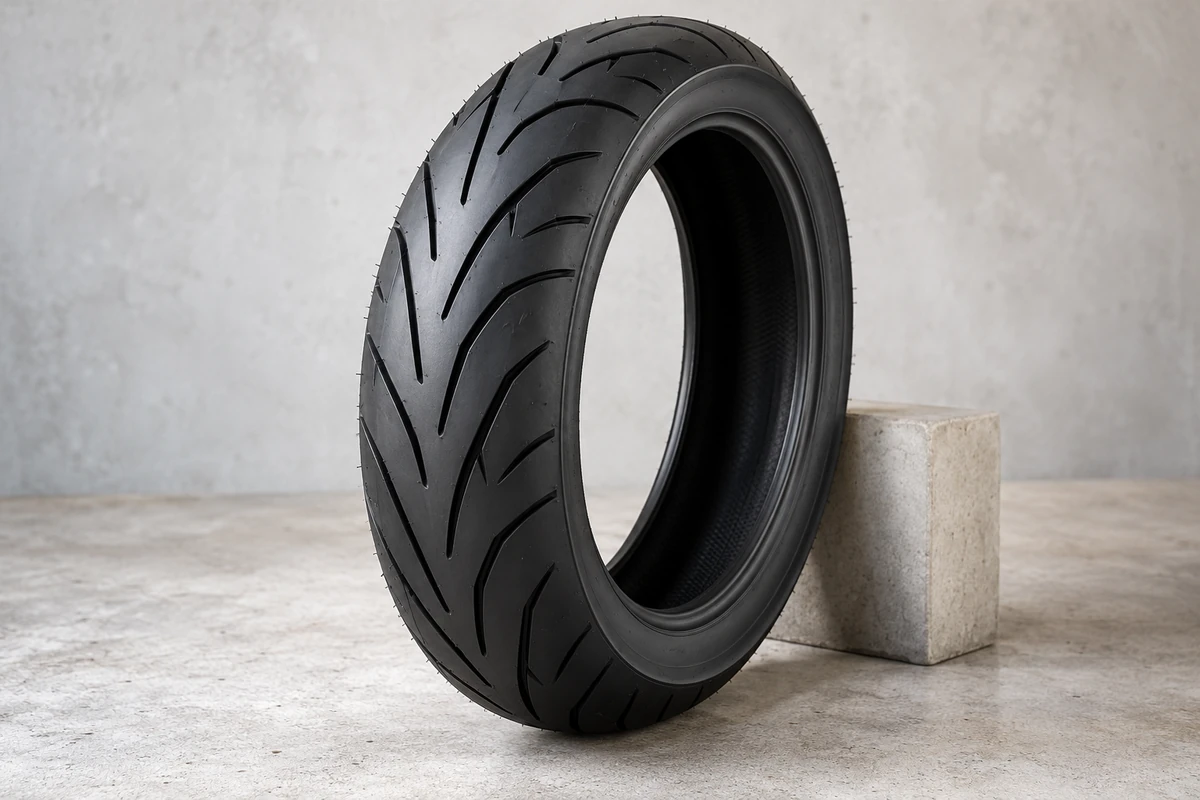
A motorcycle tire’s date record can answer an agreed purchase-age question without answering how the tire was stored. Keep both records when receiving unused tires. A recent date does not establish the storage history, and an older date does not by itself determine the commercial result without the actual agreed requirement.
The task here is to reconcile receipt evidence with an existing purchase condition. It is not to set a universal maximum buying age, forecast safe service life or design an inventory-rotation policy.
Preserve the requirement that was actually agreed
Locate the quotation, order and any accepted age-related clarification. Record the relevant date basis and what evidence the supplier agreed to provide. If the requirement refers to manufacture, do not substitute an invoice or dispatch date. If it refers to a specified range of production dates, retain the original wording rather than converting it into an improvised remaining-life promise.
When no age condition was agreed, mark that commercial gap honestly. The buyer can request clarification or discuss a proposal, but should not present a newly invented cutoff as an existing contract term. Technical concerns still require the applicable specialist assessment whether or not the purchase order addressed age.
Use one line per identified tire where date records differ. An outer-carton label may support shipment identity, but its relationship to each contained tire must be established before its date is copied across the delivery.
What the manufacturer example supports
Michelin’s motorcycle tire-change guidance says unused or infrequently used tires may show aging and identifies storage conditions among factors affecting lifespan. It calls for professional assessment of aging concerns. This supports keeping storage history separate from date evidence; it does not create a universal age limit for buying new tires. Michelin motorcycle tire aging guidance
The page is service guidance on a US-facing site, with an update shown as August 2026. This article does not transfer its service intervals, legal statements or fitment recommendations to a purchase in another market. Obtain the actual tire maker’s applicable guidance and the responsible provider’s assessment for the intended destination.
Record what storage history is documented
Ask the supplier to state the known storage period, locations and condition records relevant to the affected stock. Separate a unit-linked record from a general statement that the warehouse is suitable. If stock passed through another party, identify whether the earlier period is documented or unknown.
The buyer is not being asked to certify warehouse conditions from a supplier photograph. A photograph may establish a view at one time; it does not establish the whole history. Record the period each item of evidence covers and retain gaps rather than describing an incomplete record as continuous storage control.
Keep visible condition observations as a third record. Existing views may show an identified surface feature, but the receipt worksheet supplies no crack allowance or visual-aging threshold. Do not bend, stretch, inflate or mount a tire to create evidence for this administrative review. Further physical assessment belongs to the competent provider using applicable instructions.
Buyer worksheet
Use one record per identified unit or clearly defined affected group. This is an original purchasing aid, not a test procedure or acceptance standard.
| Field | Record to preserve | Question that remains open |
|---|---|---|
| Tire unit | Order line, exact received reference and unit-linked images | Carton evidence not yet associated with an individual tire |
| Date evidence | Existing marking or maker record and its stated meaning | Manufacture date confused with invoice or dispatch date |
| Agreed purchase condition | Original clause, controlling revision and date basis | A new cutoff presented as a previously agreed term |
| Storage history | Known periods, record issuer and documented transfers | Uncovered periods or general assurances without unit linkage |
| Visible aging record | Existing surface observations and their limits | No inferred internal condition or remaining life |
| Specialist assessment | Applicable maker guidance and actual response scope | Commercial age check mistaken for use approval |
Compare same-date tires without assuming the same history
Imagine fictional unused tires T-A and T-B with the same documented manufacture date. T-A has supplier records covering its stated storage period. T-B has an undocumented interval after transfer between sellers. The example establishes no actual condition, safe life or supplier practice.
The matching date answers the same date question for both units. It does not fill T-B’s history gap. Ask the supplier what it can establish about that interval, and retain any qualified assessment separately from the commercial age check. Do not conclude that T-A is safe because its paperwork is fuller or that T-B is necessarily damaged because a record is absent.
If the agreed purchase condition required traceable storage evidence, the missing interval is a specific requirement to resolve. If it did not, the buyer can still seek an assessment of a reported condition concern without falsely claiming that the supplier violated an invented documentation term.
Keep the resolution tied to its evidence
A supplier may offer replacement with another date range. Request the replacement’s identity and supporting records rather than treating a newer date as a complete remedy for every concern. A credit may settle a price disagreement while leaving technical suitability unanswered.
Document the actual decision under separate headings: agreed date condition, storage evidence, observed condition and specialist response. If an assessor’s response covers only one tire or a defined observation, preserve that scope. Do not use one assessed unit to clear all tires in a delivery.
A useful completed receipt record can say that the age clause was met while storage information remains incomplete, or that a replacement was agreed pending the required assessment. It should never translate a date calculation into a promised number of safe riding years.
Keep the request tied to the received item
Use the Motorcycle parts category for product context and the Motoparts sourcing request for the exact received reference and unresolved supplier question. Motoparts provides independent aftermarket and unbranded buying coordination and supplier negotiation. The manufacturer example above is documentary evidence, not a branded-goods offer, affiliation, inspection-service promise or engineering approval.
The sourcing form supports a supported-marketplace HTTPS link, an 8–1200-character description, or one or more screenshots. Image limits are five PNG, JPEG, WebP or GIF files, 10 MiB per file and 20 MiB combined. It does not accept PDF, CAD or ZIP uploads. Arrange other technical files only through a separately agreed, authorized exchange.
Frequently asked questions
Does a recent manufacture date prove good tire condition?
No. Date evidence does not establish the storage history or technical condition. Keep the agreed age check, storage documentation and any specialist assessment as separate parts of the receipt record.
Is there a universal maximum age for buying a new motorcycle tire?
This article supplies none. Use the actual agreed purchase condition and applicable manufacturer or specialist guidance. A service-replacement recommendation should not silently become a universal new-purchase cutoff.
What should I do when two same-date tires have different records?
Record each unit and the period covered by its own evidence. Request the missing information without assuming that equal dates mean equal history or that a documentation gap proves physical damage.
Does a newer replacement close a storage concern?
It answers a date question only to the extent supported by the replacement record. Identify the new unit and obtain whatever storage and condition evidence the actual requirement and responsible assessment call for.
Sources
Discuss a sourcing request related to this article.Motorcycle Tire Receipt: Separate Age and Storage Evidence