
Wheel Bearing Reorders: Count the Serviced Wheel, Not Loose Bearings
Map approved wheel-service jobs to exact front or rear bearing kits before converting loose bearing and seal counts into a reorder.
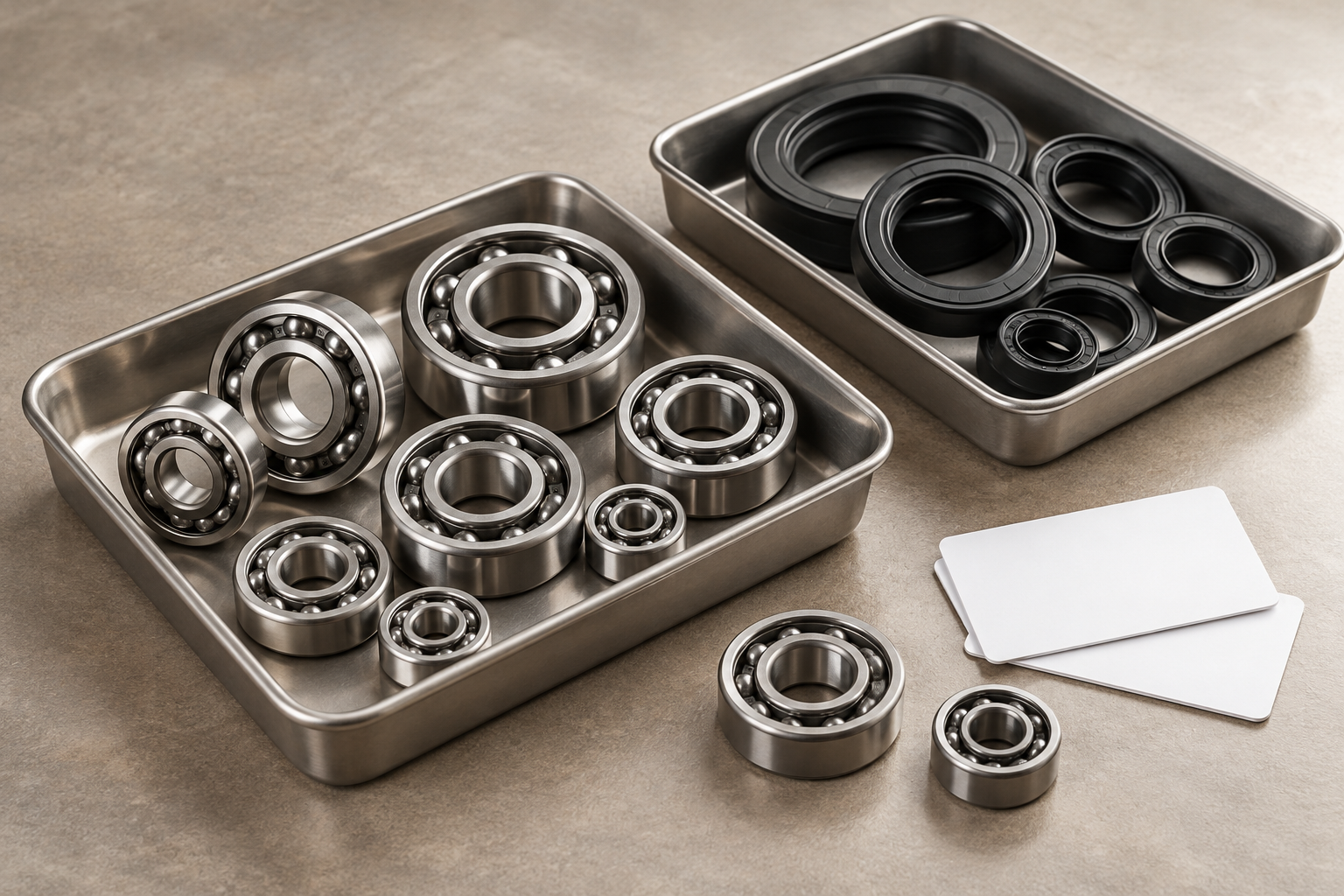
Four bearings on a shelf do not necessarily represent two wheel-service kits. A kit is a defined supplied unit for an identified application and wheel position; its completeness cannot be reconstructed from an undifferentiated bearing total.
Start with the already authorized wheel jobs. Purchasing should determine which jobs have supported kit coverage, without deciding bearing condition, seal reuse or the required repair.
Take the supply unit from the actual kit
All Balls Racing lists kit 25-1872 with two ball bearings and two seals for specified front-wheel applications. This single product record illustrates why bearing quantity, seal quantity and wheel position belong together. It supplies no universal two-bearing rule for motorcycle wheels. All Balls 25-1872 contents
For each actual requirement, retain the approved kit reference, current contents basis and applicable wheel position. A shortened description such as wheel bearings may lose the front/rear distinction. Keep any wheel replacement history attached to the application record rather than relying only on the motorcycle's original model.
Count serviced wheels rather than motorcycles
One motorcycle may contribute more than one authorized wheel job, while another contributes only one. Use the actual service schedule to identify each required position. Do not presume that every visit includes both wheels or that a front kit can satisfy a rear requirement.
Allocate matching complete kits to these wheel jobs. Keep a kit reserved for a named included job with that job; do not remove it from stock and then count the same job as entirely uncovered. Where demand is already net of allocations, use the remaining figures consistently.
Keep loose components as a separate proposal
List identified loose bearings, seals and incomplete kits outside the complete-kit count. If the responsible provider has an approved completion route for an exact kit, record that route and its contents evidence separately. The buyer should not assemble a kit on paper by pooling matching-looking bearings.
A supplier may offer a complete kit, bearing-only supply or another defined group. Expand the actual proposal against the approved wheel job and show exclusions. More pieces do not compensate for an incorrect position or a missing seal required by that job.
Fictional example: one front job remains uncovered
Two fictional front-wheel jobs require approved kit F. Stores has one complete eligible F kit, one rear kit R and four loose bearings with no accepted kit-completion record. One front job is covered and one is not. The R kit and loose bearings do not create a second F allocation.
A confirmed F purchase would close the second front requirement. If the next revision adds a rear-wheel job that calls for R, the existing R stock can be considered for that distinct job. Its earlier exclusion from front coverage was not a claim that it had no value.
Suppose a new quote calls its unit a pair but means two loose bearings. Ask the seller to state whether the required seals and the approved kit identity are included. A purchase-unit label cannot silently change the job coverage the buyer calculated.
Reorder worksheet
Use this original purchasing aid with the actual approved records. It does not supply a test, installation method or technical acceptance.
| Field | Record and decision basis |
|---|---|
| Vehicle and wheel position | Actual vehicle, installed wheel and serviced position |
| Approved kit | Exact provider-approved kit and contents basis |
| Jobs requiring that kit | Unique wheel jobs, not assumed motorcycles-per-kit |
| Complete eligible kits | Complete matching kits available to those jobs |
| Loose components | Loose bearings, seals and incomplete groups kept distinct |
| Confirmed purchase unit | Supplier-defined unit and explicit contents/exclusions |
Request the identified replenishment
See ATV parts for category context. In a Motoparts sourcing request, identify the approved product, outstanding quantity and exact supplier question. Motoparts provides independent aftermarket and unbranded buying coordination and supplier negotiation. Named manufacturer examples are documentary references, not branded supply offers, affiliations or evidence of another supplier’s capability.
The initial form supports a supported-marketplace HTTPS link, an 8–1200-character description or screenshots. Image limits are five PNG, JPEG, WebP or GIF files, 10 MiB each and 20 MiB combined. PDF, CAD and ZIP files require a separately agreed authorized exchange. A request supplies no engineering approval, guaranteed saving or delivery commitment.
Frequently asked questions
Does one wheel bearing kit cover a whole motorcycle?
Use the exact kit and authorized positions. The named example is a specified front-wheel kit, not a whole-motorcycle package. Count actual serviced wheels and preserve their separate references.
Can four loose bearings count as two kits?
Not without an applicable, approved completion basis covering every required component and identity. A bearing total cannot establish seal contents or wheel application. Keep loose stock separate until resolved.
Does every kit contain two bearings and two seals?
No. That count belongs to the cited 25-1872 record. Obtain current contents for the actual offered kit and do not extend one catalogue example to other applications.
What if the seller uses pair instead of kit?
Ask exactly what the pair contains and how it maps to the approved wheel job. Preserve bearing-only, seal and complete-kit units separately so a familiar word cannot conceal a narrower offer.
Sources
Discuss a sourcing request related to this article.Wheel Bearing Reorders: Count the Serviced Wheel, Not Loose Bearings