
CVT Belt Receipt: Preserve a Reported Folding Event
Keep a CVT belt’s as-arrived folding or bundling evidence when seeking assessment; a smooth surface cannot establish internal cord condition.
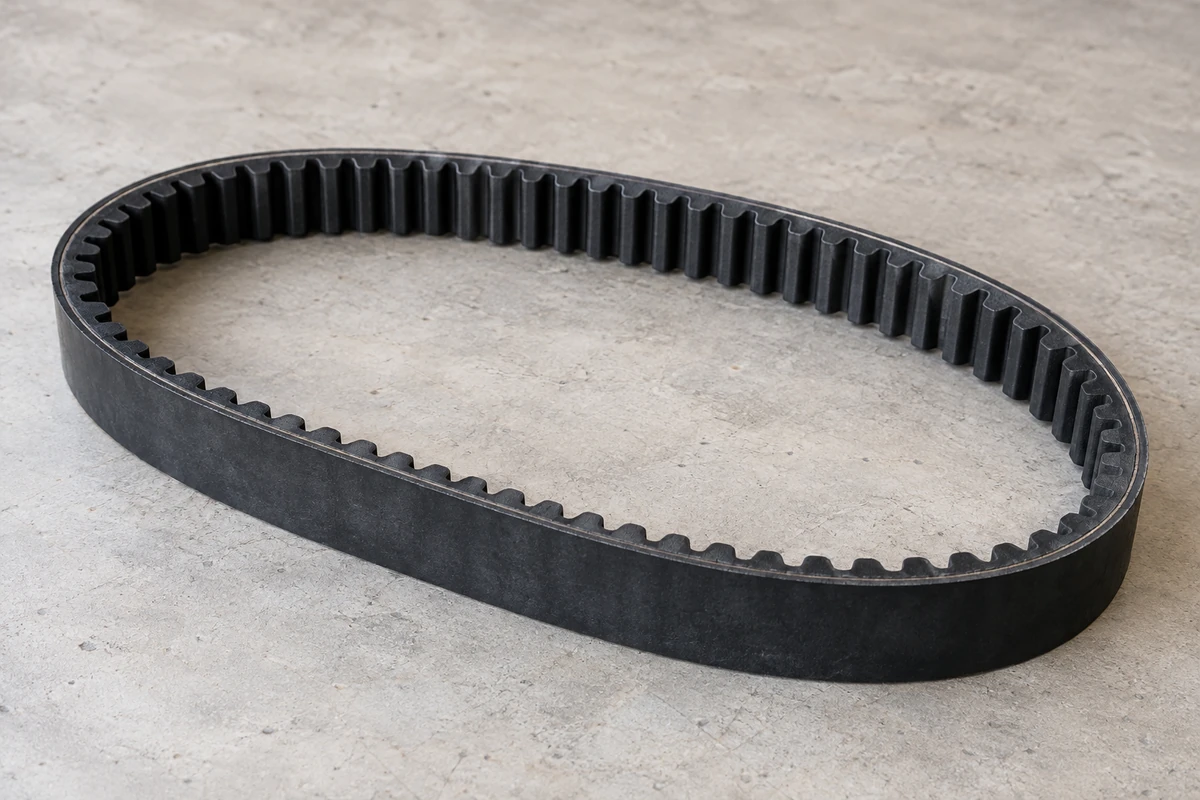
A CVT belt may look smooth after unpacking while an earlier arrival image records it tightly bundled. Preserve that original handling evidence. The question is what the documented event means for the exact delivered belt, not whether a later photograph looks tidier.
This receipt guide does not choose a belt, design its packaging or provide a hidden-cord test. It helps the buyer seek a product-specific assessment of an already reported bending, twisting or bundling event.
Start with the as-arrived record
Link the order line and full belt reference to the original receiving images. Record the time and source of each view and whether it shows the item before or after unpacking. If several belts were bundled together, identify which units can actually be associated with the recorded event.
Keep the original files. A later picture can add information about the current visible state, but it should not replace the earlier view or be presented as the only arrival evidence. Avoid cropping away the feature that explains why the question arose.
If the event was reported verbally and no image exists, preserve the account as a report rather than inventing visual confirmation. State who reported it and what was observed. The absence of a photograph does not justify silently rewriting the history as normal handling.
Why the surface cannot settle the cord question
Gates’ TT004-13 G-Force powersports bulletin warns that excessive bending and twisting can create invisible damage to tensile cords, and specifically addresses bundling and zip tying. The document carries a 2018–2020 copyright range. This is bounded handling guidance for the named belt range, not an inspection method or a current clearance for every CVT belt. Gates belt-handling bulletin, page 1
The buyer should therefore avoid treating an undamaged-looking surface as proof that an identified handling event had no consequence. Conversely, the record alone does not authorize purchasing to diagnose the internal state of an unknown belt. Obtain the applicable maker’s response to the exact product and event.
Do not reproduce the bulletin’s installation or riding break-in instructions as a way to resolve a receipt dispute. Running the belt is not a documentary substitute for the required condition assessment.
Separate current appearance from the event history
Use distinct fields for as-arrived shape, documented handling and current visible appearance. This prevents an answer about only the third field from closing the first two. A supplier may correctly say that no exterior crack is visible in a later image while leaving the original bundling question unanswered.
Do not bend, invert, stretch or tie the belt again to recreate the event. Do not cut into it, try to expose cords or fit it to a drive to demonstrate that it still works. Any additional examination requires an appropriate competent method and authorization outside this purchasing worksheet.
Where an intervention already happened, record it factually. “Tie removed before the second photograph” identifies a sequence; it does not establish who caused any damage or whether damage exists. Preserve uncertainty rather than treating the intervention as either repair or proof of condition.
Buyer worksheet
Use one record per identified unit or clearly defined affected group. This is an original purchasing aid, not a test procedure or acceptance standard.
| Field | Record to preserve | Question that remains open |
|---|---|---|
| Belt reference | Full ordered and delivered designation with unit association | A generic CVT description used instead of exact identity |
| As-arrived shape | Original image or attributed report before any intervention | Missing view or ambiguous association |
| Existing packing evidence | Original file sequence and visible bundling details | Later tidy image replacing the arrival record |
| Known handling event | Actual account and any later change in state | Unproven internal damage or unrecorded intervention |
| Maker assessment | Applicable product guidance and event-specific response | General flexibility claim treated as clearance |
| Replacement identity | New reference, claim linkage and independent receipt record | Original or replacement status assumed from a remedy |
Ask for an assessment of this belt and this history
Give the supplier the exact identity and the evidence sequence, then request the applicable maker or competent provider’s response. Ask it to distinguish an interpretation of the recorded event from any conclusion based on a separate authorized assessment.
A generic statement that CVT belts are flexible does not address a specified bundled configuration. Nor does the existence of a supplier packing practice establish that the practice is acceptable for the delivered model. Keep the question tied to the actual event, without turning the article into instructions for future packing design.
If a replacement is proposed, obtain its exact reference and a record linking it to the claim. Preserve the original affected unit’s status. Do not let a replacement shipment make the original belt appear released by default or transfer the original evidence to the new unit.
Fictional example: removing the tie changes the photograph
Imagine fictional belt V-11 arriving in a tightly tied bundle, documented in an existing receiving image. A later image shows the same belt without the tie and with no obvious surface mark. The seller uses only the later image to say it looks fine. These are invented observations, not an actual handling experiment.
The buyer keeps both views and asks for a product-specific response to the original bundling event. It makes no claim that the cords are definitely damaged, but it also does not accept the later appearance as proof that they are intact. The response must address the history rather than merely the latest presentation.
Close the recorded event without inventing a test result
Use status language that identifies the evidence and decision owner: “handling event referred for assessment,” “replacement agreed,” or the actual qualified disposition with its conditions. Keep any commercial resolution separate from technical conclusions.
The useful result is a traceable answer or a clearly defined remaining question. A receipt worksheet should never turn “no visible mark” into “internal cords passed.”
Keep the request tied to the received item
Use the ATV parts category for product context and the Motoparts sourcing request for the exact received reference and unresolved supplier question. Motoparts provides independent aftermarket and unbranded buying coordination and supplier negotiation. The manufacturer example above is documentary evidence, not a branded-goods offer, affiliation, inspection-service promise or engineering approval.
The sourcing form supports a supported-marketplace HTTPS link, an 8–1200-character description, or one or more screenshots. Image limits are five PNG, JPEG, WebP or GIF files, 10 MiB per file and 20 MiB combined. It does not accept PDF, CAD or ZIP uploads. Arrange other technical files only through a separately agreed, authorized exchange.
Frequently asked questions
Does a smooth belt surface prove the cords were unaffected?
No. Gates’ named G-Force bulletin describes invisible cord damage from excessive bending or twisting. That supports retaining the handling history, not diagnosing an unknown belt from photographs.
Should I fold the belt again to show the supplier what happened?
No. Use the existing account and images. Recreating the event would change the evidence and introduce another handling intervention; this guide provides no physical test procedure.
Does the Gates bulletin apply automatically to every CVT belt?
No. It is a historical powersports document for a named range. Ask the actual maker or competent provider for applicable guidance and an assessment of the exact delivered product.
How should a replacement be recorded?
Give it its own identity and receipt record linked to the original claim. Preserve the original unit’s unresolved or actual disposition. A replacement arrangement is not a retroactive technical clearance for the first belt.
Sources
Discuss a sourcing request related to this article.CVT Belt Receipt: Preserve a Reported Folding Event