
Foam Filter Stock: Count Service Returns Before Ordering More
Separate foam filters in care from released filters, then decide whether the next service event needs extra rotation capacity.
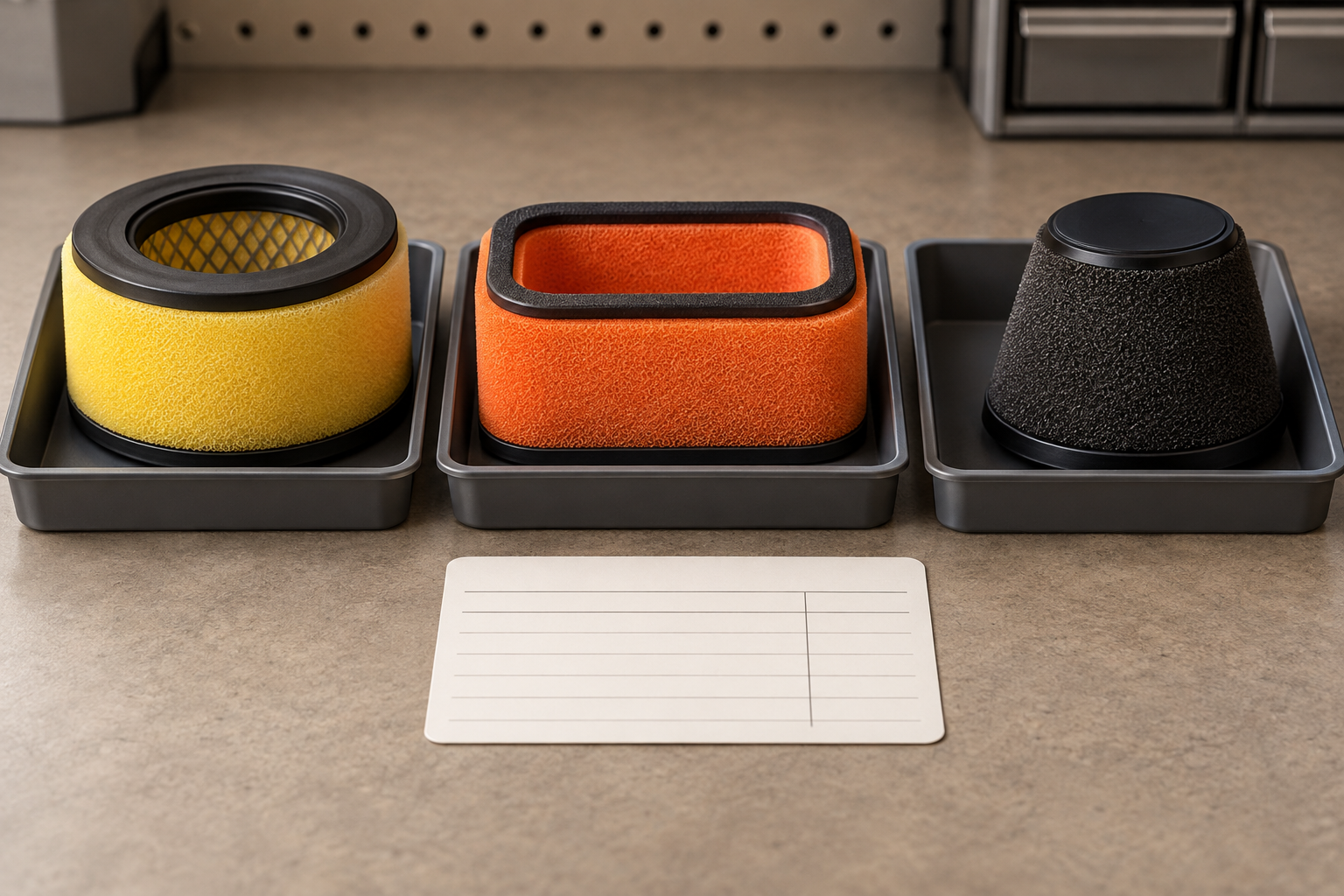
A washed foam filter is not automatically available for the next service event. The stock record must preserve where it is in the applicable care process and whether the responsible provider has released it for the identified requirement.
Before ordering, distinguish an addition to the retained rotation pool from replacement of a filter already retired. Both can create a purchase, but only one increases the future pool when service returns arrive.
Keep filter, cage and care identity together
Twin Air's technical support page distinguishes washing, drying and oiling in its named foam-filter care guidance. The narrow inventory lesson is that a dry-state entry is not the same record as a completed conditioning and release entry. This article reproduces no care procedure or return-time estimate. Twin Air care stages
Retain the approved filter reference and its cage or support relationship from existing application records. Do not infer that a returned filter serves every cage of a similar shape. If a new purchase includes different supporting hardware, make that a separate scope question rather than counting the whole offer as another interchangeable filter.
Read the next event against actual release records
List filters already released, filters in the authorized care process, retired filters and unresolved units. For each return, ask the accountable provider for the current stage and whether availability before the actual event is supported. Do not infer readiness from a washed label, dryness or the time elapsed since removal.
Keep expected return and actual release distinct. A planned completion may help compare scenarios, but the worksheet should show any condition still outstanding. Once a filter enters released stock, remove it from expected returns so it is not counted twice. No inventory deadline justifies abbreviating its care process.
Show the population after the immediate shortage
Where the next event cannot be moved by its authorized owner, compare a genuinely available matched supply option with the uncovered requirement. Where timing can change, obtain the actual scheduling decision and a supported return before using that alternative.
A filter in care remains in the retained population unless its responsible disposition says otherwise. Buying another while retaining it creates extra rotation capacity after return. Record that consequence so the next buyer does not repeat a one-time addition as though it were routine consumption. The worksheet does not decide retirement criteria.
Fictional example: three needed, one released
A fictional service event requires three approved filters for established filter/cage combinations. One is released and available. Two are in care, with no supported release before the event. Confirmed coverage is one and the immediate gap is two.
If the owner authorizes purchasing two matched filters that will be released in time, the later retained pool can reach five when the original two return. The purchase added two rotation units; it did not establish that two old filters failed. If one return is subsequently supported before the event, recalculate the immediate gap as one before committing to a real pack offer.
If a provider retires one original filter, record that actual disposition separately. The final retained population changes, but the worksheet cannot create the retirement decision or infer one from a delayed return.
Reorder worksheet
Use this original purchasing aid with the actual approved records. It does not supply a test, installation method or technical acceptance.
| Field | Record and decision basis |
|---|---|
| Filter and cage identity | Approved filter and retained cage/support reference |
| Next approved requirement | Identified upcoming service event and required units |
| Care stage | Current care stage from the responsible record |
| Responsible release | Actual release decision and its limitations |
| Timely return | Supported return date versus event, without invented durations |
| Added rotation capacity | Population after returns, additions and documented retirements |
Request the identified replenishment
See Dirt bike parts for category context. In a Motoparts sourcing request, identify the approved product, outstanding quantity and exact supplier question. Motoparts provides independent aftermarket and unbranded buying coordination and supplier negotiation. Named manufacturer examples are documentary references, not branded supply offers, affiliations or evidence of another supplier’s capability.
The initial form supports a supported-marketplace HTTPS link, an 8–1200-character description or screenshots. Image limits are five PNG, JPEG, WebP or GIF files, 10 MiB each and 20 MiB combined. PDF, CAD and ZIP files require a separately agreed authorized exchange. A request supplies no engineering approval, guaranteed saving or delivery commitment.
Frequently asked questions
Is a dry foam filter ready to count?
Dryness is only one possible recorded stage. Count confirmed coverage from the responsible product-specific release, including the relevant preparation state. This article provides no visual readiness test or oiling instructions.
Do filters being serviced count as replacements?
They remain retained units unless a responsible decision has retired them. Buying additional filters while expecting those returns increases rotation capacity. Keep the reason for the purchase and the later population visible.
Can I assume the care process will finish overnight?
No return duration is supplied here. Obtain a supported event-specific expectation from the responsible provider and keep outstanding release conditions visible. A deadline does not authorize a shortcut.
Does the same foam shape prove cage compatibility?
No. Preserve the established filter and cage relationship from the actual application record. Resolve a changed support system with the technical owner before treating its filters as shared stock.
Sources
Discuss a sourcing request related to this article.Foam Filter Stock: Count Service Returns Before Ordering More