
Chain Connecting-Link RFQ: Preserve the Exact Series
Identify the chain model, connecting-link series and joining style before comparing a link-only offer with a complete-chain proposal.
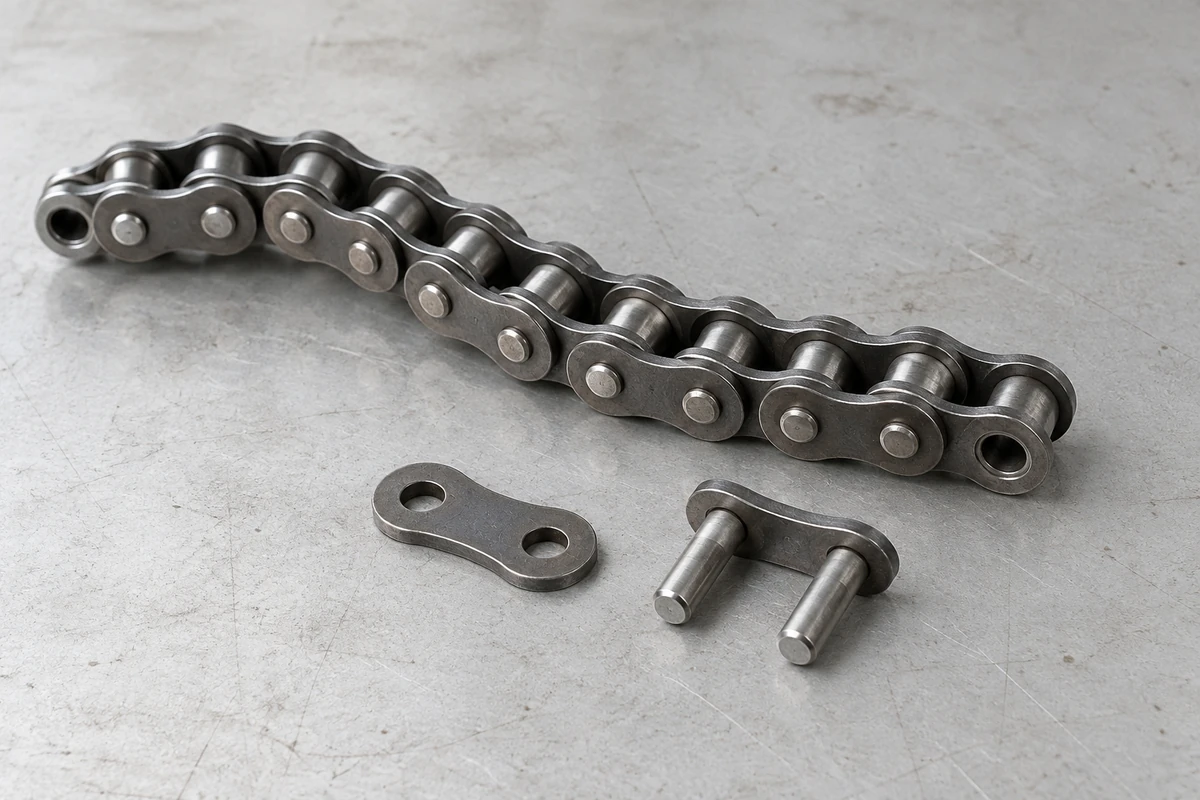
A connecting link offered for the same nominal chain size can still belong to the wrong chain model. Begin an RFQ for a chain connecting link with the complete chain identity and the maker's specific combination evidence. Leave a link-only proposal unapproved when either is missing.
This decision starts before the price comparison: can the proposed link be considered for the identified chain, or must the responsible service provider define a different replacement scope? A complete-chain offer is a separate option requiring its own application confirmation, not an automatic solution to an unidentified chain.
Find the chain model behind the size
D.I.D's FAQ states that connecting links are model-specific and cannot be mixed across chain models. It also distinguishes aftermarket availability from OEM-chain spare enquiries, for which it directs customers to the vehicle dealer. These are D.I.D's bounded statements, not a promise that a buying agent can obtain an original link. D.I.D connecting-link FAQ
For the buyer, the practical consequence is to keep chain maker, full model and original-reference evidence together. Do not replace an incomplete model code with a pitch or size label. Existing paperwork and accessible markings may help identification; a seller's photograph of a similar link cannot complete that record.
Ask which source identifies the installed chain rather than merely the chain originally specified for the motorcycle. A previous owner may have replaced it. If those records disagree, make the disagreement the first question for the chain maker or qualified service provider. Purchasing should not decide which evidence to discard just because one reference produces a cheaper listing.
Separate link series from joining style
Record the offered link's exact series and its declared style in different fields. A style description does not establish model compatibility, and a model name does not answer which style the seller actually supplies. Ask for the applicable maker documentation covering both, without assuming every style is available for every model.
Where a supplier proposes an unbranded alternative, ask it to identify its own product and the evidence for the claimed combination. A copied branded reference in a marketplace title is not that evidence. The RFQ must not invite a supplier to reproduce protected markings or imply that an independent aftermarket proposal is genuine branded stock.
Compare two incomplete replies
In a fictional enquiry, offer A names the requested nominal size but another chain series. Offer B names the requested series but leaves the joining style blank. Neither is a real quotation or a fit approval.
A has a declared model discrepancy. Request a proposal for the actual chain model and keep the original response as a rejected basis unless the responsible reviewer establishes otherwise. B needs a narrower answer: the exact link designation, style and supporting combination record. Calling both replies 'compatible links' would conceal the different questions.
If the chain cannot be identified, do not guess a joining method. Ask the service provider whether a complete-chain request is appropriate, then obtain the approved specification for that separate request. This article does not assess chain wear, link reuse, riveting or installation.
Negotiate only within the documented replacement scope
A lower link price is meaningful only for the same documented model and accepted scope. Ask whether the supplier can quote that scope and disclose any proposed substitution before shipment. Do not bargain away the model requirement to obtain an available generic link.
Keep the final reviewer decision attached to the exact offered designation. A supplier's later series change reopens the compatibility question even when the invoice still uses the same short description. The useful purchasing outcome is a traceable candidate for responsible review, not a safety declaration from a completed spreadsheet.
A product-specific quotation worksheet
| Field | Record and request | Keep unresolved |
|---|---|---|
| Chain maker and full model | Installed-chain record and accessible marking reference | Nominal size without the model |
| Existing reference | OEM or aftermarket identity and supporting source | An original vehicle specification after an undocumented chain change |
| Link series and style | Exact offered designation and separately named style | Style used as evidence of model compatibility |
| Combination evidence | Applicable chain-maker statement for the actual pair | A broad seller claim or copied brand code |
| Replacement scope | Link-only request or separately authorized complete-chain proposal | Purchasing silently broadening the repair |
| Unresolved identity | Named evidence gap and responsible service provider | Blank fields treated as accepted |
Use this original purchasing worksheet to record the supplier’s actual answers. It is not a test procedure or fit certificate; unresolved safety-sensitive application questions require exact product evidence and confirmation by the responsible provider.
Prepare a sourcing request
Use the Motorcycle parts category for the product group and the Motoparts sourcing request for the exact item and unanswered question. Keep any affordable aftermarket or unbranded alternative tied to the authorized application or released drawing. Motoparts is an independent buying agent for aftermarket and unbranded parts; a request does not establish supplier manufacturing capability, guaranteed savings, branded affiliation or technical approval.
The initial form accepts a description of 8–1200 characters and up to five PNG, JPEG, WebP or GIF images, limited to 10 MiB each and 20 MiB total. Authorized drawing images may start a customization enquiry. CAD, PDF and ZIP files require a separately agreed authorized exchange; the image field is not a technical-file portal.
Frequently asked questions
Is chain size enough to buy a connecting link?
No. Keep the complete chain model and offered link designation together, with applicable maker evidence. A nominal-size match does not resolve a different series or an unidentified installed chain.
Does a clip or rivet description establish compatibility?
It identifies a joining style, not the complete chain-model relationship. Ask for both series and style without assuming that every style is offered for every chain.
What if the chain was changed by a previous owner?
Resolve the installed chain from available records and appropriate maker or service-provider support. The original motorcycle specification alone may no longer describe it. Leave the link purchase unapproved while identity is unresolved.
Should I order a complete chain when I cannot identify the link?
Ask the responsible service provider to define the replacement scope. A complete chain is a separate proposal with its own application requirements; its larger scope does not automatically establish suitability.
Sources
Discuss a sourcing request related to this article.Chain Connecting-Link RFQ: Preserve the Exact Series