
Handlebar Receipt: Document Unexplained Alterations
Keep an unexplained hole, mark or declared straightening history tied to the ordered handlebar state and applicable maker instructions.
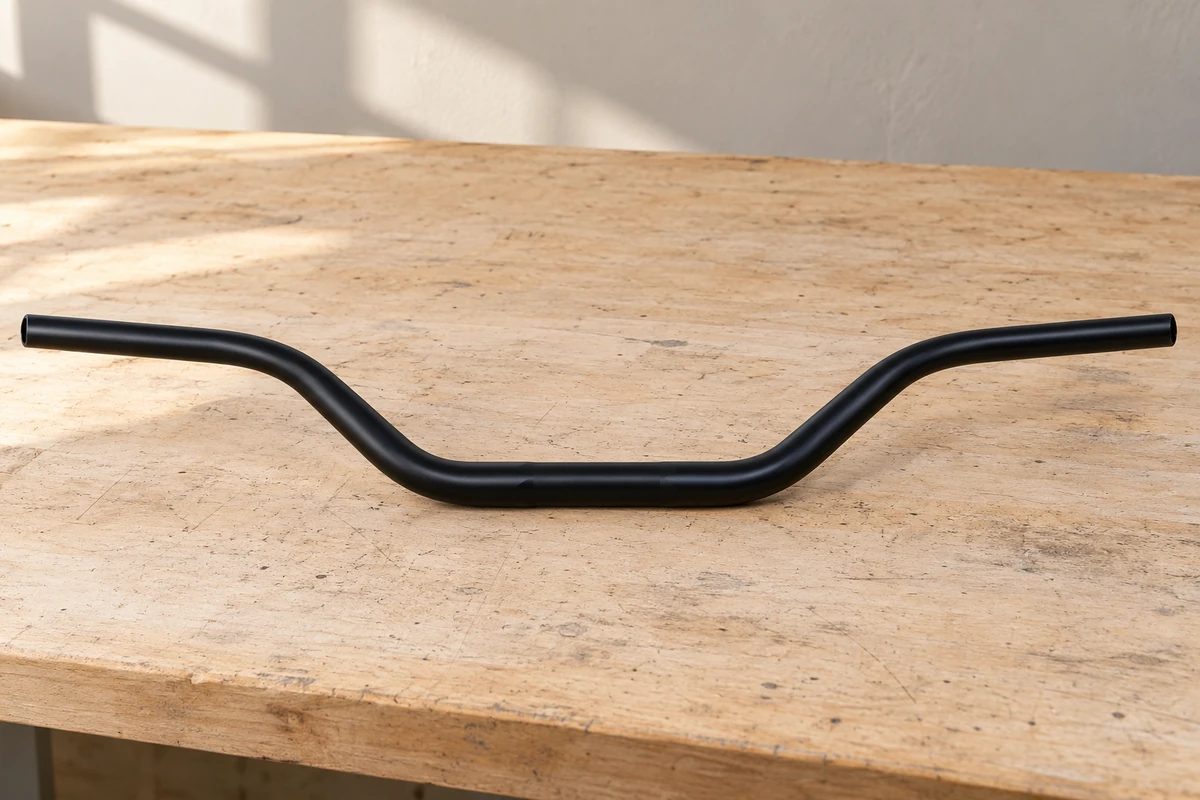
An unexplained drilled hole in a handlebar ordered as new and unmodified is a supply-state question. Record the existing evidence and ask who authorized the alteration before treating the delivered bar as the ordered product. An explanation that the work was intended to help installation does not establish that the buyer approved it.
This guide does not choose a handlebar bend or authorize drilling, cutting, straightening or cosmetic repair. It addresses the history and documentation of an already received item.
Retain the ordered manufacturing state
Find the accepted product reference, drawing or specification and any explicitly authorized customization. Keep the controlling revision visible. If an ordered feature was already part of the released design, that is different from a supplier adding it later without a recorded change.
Record the exact delivered designation and the evidence connecting the observed bar to the order. Do not infer that every similar bar in a batch received the same work. Where the order did not define the relevant feature, preserve that gap and obtain the actual design source rather than inventing a universal no-hole rule.
A newness claim and an alteration-history declaration answer different questions. A product can be advertised as unused while a supplier also reports prior work. Purchasing should retain both statements and ask the appropriate technical owner what that history means for the exact item.
Use the named warning without broadening it
Renthal’s Fatbar warning page prohibits modification and drilling of the named product and warns against using damaged or marked bars. It also says not to straighten bent bars. These are restrictions for the product addressed by that page, not a universal cosmetic allowance or an approval method for another supplier’s handlebar. Renthal Fatbar warnings
The receiving lesson is to obtain the actual applicable instructions before accepting an alteration explanation. An independent aftermarket bar needs its own identity and evidence. A seller cannot establish permission for its design merely by choosing a convenient sentence from another manufacturer’s instructions.
Keep visible evidence and claimed history separate
Use existing images to locate the hole or mark relative to an identifiable feature. Describe what is visible without declaring a manufacturing cause. A circular opening may be visible while its origin is undocumented; a surface mark does not independently prove straightening or prior use.
If the supplier states that straightening, drilling or other work occurred, record its exact declaration, timing and affected units. Request the corresponding work and authorization record. Do not convert a vague “adjusted at the factory” statement into a defined approved process.
Do not probe the hole, remove finish, enlarge an opening, bend the bar or try to straighten it for this review. Do not fit it to a motorcycle to see whether the alteration helps. Further assessment, if needed, requires a competent owner and applicable product-specific instructions.
Buyer worksheet
Use one record per identified unit or clearly defined affected group. This is an original purchasing aid, not a test procedure or acceptance standard.
| Field | Record to preserve | Question that remains open |
|---|---|---|
| Handlebar reference | Exact order, delivered designation and governing revision | Generic style used instead of product identity |
| Ordered unmodified state | Approved drawing and any separately authorized customization | Requirement inferred after receipt |
| Hole or mark location | Existing view with feature location and visibility limits | Appearance used to infer drilling or straightening history |
| Declared prior work | Supplier’s actual account and unit-linked record | Vague adjustment claim treated as an approved process |
| Applicable instructions | Actual maker/design restrictions and relevant revision | Another manufacturer’s warning used as a universal standard |
| Responsible decision | Technical owner plus commercial change authorization | Helpful intent or credit substituted for acceptance |
Ask separately about explanation and authorization
A supplier can explain why it performed work without showing that the work was approved for the order. Ask for both the actual declared history and the relevant authorization. Keep any later proposed concession separate from the original requirement.
If the supplier claims the feature is standard production, request the exact product revision and the evidence linking it to the delivered bar. If the approved drawing already includes the feature, the buyer can reconcile that design question without making a broader strength or fit conclusion.
If the supplier instead proposes replacement with an unmodified bar, retain the new product reference and document the replacement independently. Do not describe the first bar as accepted simply because a replacement is on its way. Any return, retention or other commercial arrangement must follow the actual agreement and authorized process.
Fictional example: a helpful intention is not an approved change
Imagine fictional handlebar H-06 ordered against an unmodified reference. An existing receipt image shows a hole not explained by the supplied drawing. The seller says it added the hole to make installation easier. This is an invented purchasing example, not a real modification or product diagnosis.
The buyer records the explanation and asks for the approved design or change authorization covering H-06. It does not approve the alteration by trying the controls on the bar. If no authorization exists, the supplier must address that discrepancy through the actual commercial and technical review process.
If a later drawing revision is supplied, record when it was issued and whether it was accepted for the order. A newly issued document should not silently overwrite the original receiving baseline. The responsible provider still determines the exact product’s technical disposition.
Keep the record from becoming a repair instruction
The completed report should state what was observed, what work was declared, which requirements apply and who owns the unresolved decision. It may conclude that a feature was documented in the approved design, or that an unexplained change remains open. Those are bounded documentation outcomes.
No receiving worksheet can turn an undocumented alteration into permission to repair or use the bar. Keep that distinction explicit when discussing credits, replacements or revised paperwork.
Keep the request tied to the received item
Use the Dirt bike parts category for product context and the Motoparts sourcing request for the exact received reference and unresolved supplier question. Motoparts provides independent aftermarket and unbranded buying coordination and supplier negotiation. The manufacturer example above is documentary evidence, not a branded-goods offer, affiliation, inspection-service promise or engineering approval.
The sourcing form supports a supported-marketplace HTTPS link, an 8–1200-character description, or one or more screenshots. Image limits are five PNG, JPEG, WebP or GIF files, 10 MiB per file and 20 MiB combined. It does not accept PDF, CAD or ZIP uploads. Arrange other technical files only through a separately agreed, authorized exchange.
Frequently asked questions
Does a visible hole always prove unauthorized drilling?
No. First establish the exact approved design and existing evidence. A visible feature may be specified or may be unexplained; its appearance alone does not establish its manufacturing history or authorization.
Can a seller’s installation explanation authorize an alteration?
No. An explanation of intent is separate from the buyer’s approved scope and the actual product instructions. Request the applicable design or change record and preserve the original requirement.
Should a received bar be straightened or drilled to settle the problem?
No such work is authorized by this guide. Preserve the received evidence and obtain a competent product-specific disposition. The named Renthal warning expressly restricts modification and straightening for its product.
What if the seller sends a revised drawing after delivery?
Keep both revisions and record when the new one was issued and whether it was accepted for the order. A retrospective document does not automatically change the original agreement or provide technical release.
Sources
Discuss a sourcing request related to this article.Handlebar Receipt: Document Unexplained Alterations