
Fork Oil Records: Keep Height With Its Method
Distinguish oil-height records, volume entries and method references for covered open-chamber forks without inventing a fill or conversion rule.
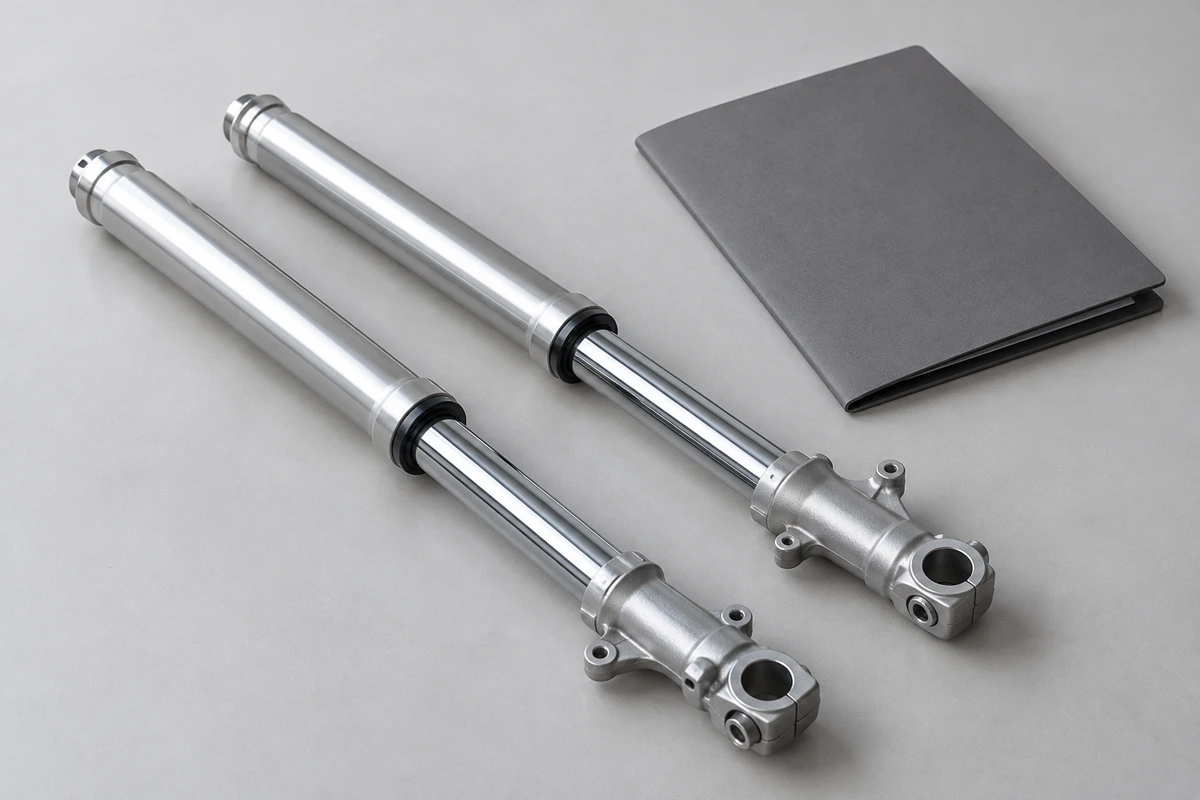
An oil entry on a returned fork sheet needs more than the lubricant name. The buyer must know whether it records a quantity added or an oil-height result, and which method gives that result its meaning. A volume invoice and a height worksheet should not be merged into one field marked “oil confirmed.”
The decision here is whether an already completed service record answers the authorized oil-record requirement. No filling, draining, bleeding or measurement procedure is provided.
A height depends on more than the word millimetres
Race Tech's oil-level page describes an inter-tube oil-space issue in covered upside-down open-chamber forks, particularly its KYB/WP discussion. It explains that different treatment of oil in that space changes the meaning of the reported height. Its recommendations belong to its described method. Race Tech fork oil-level context
The source was checked on 14 October 2026. It does not establish that every fork has the same construction or that another maker's procedure is wrong. The documentary implication is narrower: method identity can matter even when two sheets use the same unit and both say oil level.
Preserve three independent answers
Keep fluid identity, reported quantity type and method reference in separate entries. Fluid identity answers what product the provider says it used. Quantity type distinguishes a volume entry from a distance-based result. Method identifies the governing procedure and relevant fork configuration for that result.
A purchase invoice for a container can support the purchasing history but does not establish how much entered either fork leg or what result was recorded. Similarly, a report carrying a height does not identify the fluid brand or specification unless its author supplies that association. Ask for each missing answer instead of allowing one convincing attachment to stand in for all three.
Use the provider's actual assembly and side identifiers. If a report covers both legs together, ask the author to state the coverage. Do not duplicate one entry into two apparently measured rows without evidence that the record supports both.
Compare like records before asking for a correction
Read the approved requirement and the service sheet together. Where both identify a height, check whether their method references agree. Where one identifies volume and the other height, request a provider explanation of how the delivered evidence answers the requirement. The buyer should not calculate a missing result from container capacity or an assumed internal geometry.
If two methods appear in the packet, ask which one governed the completed event. Preserve an older method as background when that is its actual role. A newer web page does not retrospectively establish how earlier work was performed, and an old worksheet does not automatically remain applicable to a changed fork.
Oil-record comparison worksheet
| Record | Entry needed | Do not substitute |
|---|---|---|
| Covered fork | Actual build, leg coverage and service event | Motorcycle badge alone |
| Fluid identity | Exact provider-declared product and source | Container color or generic oil wording |
| Quantity type | Height result or volume record, in original units | One quantity silently relabelled as the other |
| Governing method | Applicable procedure issue and provider association | Similar online instructions |
| Requirement relationship | Qualified explanation of comparability | Buyer-created conversion |
| Unresolved discrepancy | Missing field or method conflict and reply owner | A general service-complete tick |
The worksheet organizes records only. It supplies no oil specification, target or acceptance limit.
Fictional case: matching heights from different methods
A fictional job packet contains an approved method reference M and a returned height sheet referencing N. Both display the same reported figure. A seller replies that matching numbers prove the work matches the request.
The buyer asks the qualified author to reconcile M and N for the identified fork build and event. If N was a clerical error, the corrected record should say that. If N actually governed the work, the technical owner needs to determine what that means for the agreed requirement. Purchasing neither changes the heading nor requests an improvised oil adjustment to make the paperwork agree.
A second attachment listing oil volume does not settle the method conflict. Retain it for the role its author supports. The handover can close the fluid-identity question while leaving height comparability open. That partial outcome is more useful than describing the whole fork as accepted or rejected without a qualified decision.
Send a focused purchasing enquiry
See Motorcycle parts for category context. A Motoparts sourcing request can identify the actual product and the specific missing provider answer. Motoparts offers independent aftermarket and unbranded buying coordination and supplier negotiation. Manufacturer examples here imply no affiliation, branded-goods offer, specialist-service capability, fit guarantee or engineering approval.
The initial form accepts a supported marketplace HTTPS link, an 8–1200-character description or screenshots. Images are limited to five PNG, JPEG, WebP or GIF files, 10 MiB each and 20 MiB combined. PDF, CAD, ZIP and other technical files need a separately agreed authorized exchange; the image field is not a technical-file portal.
Frequently asked questions
Can an oil-volume entry replace a fork oil-height record?
Not automatically. They describe different quantities. Ask the provider to explain how the actual record answers the authorized requirement for the identified fork and method; do not calculate a substitute from container capacity.
Why retain the method if both sheets report millimetres?
For the covered open-chamber example, the inter-tube oil condition forms part of the method context. Matching units and digits do not by themselves establish that the reports describe comparable states.
Does the cited Race Tech method govern every fork?
No. It is a bounded manufacturer-service reference. The qualified provider must establish the current applicable instructions for the exact construction and explain which method governed the recorded work.
Can one result be copied to both fork legs?
Only if the attributable source actually covers that scope. Preserve the provider’s leg or assembly identifiers and request clarification where coverage is unclear instead of manufacturing a second recorded result.
Sources
Discuss a sourcing request related to this article.Fork Oil Records: Keep Height With Its Method