
Wheel Parts or an Assembled Wheel: Compare the Same Service Endpoint
Compare component delivery plus local wheel work with an assembled-wheel service using the actual work scope and shipment state for each route.
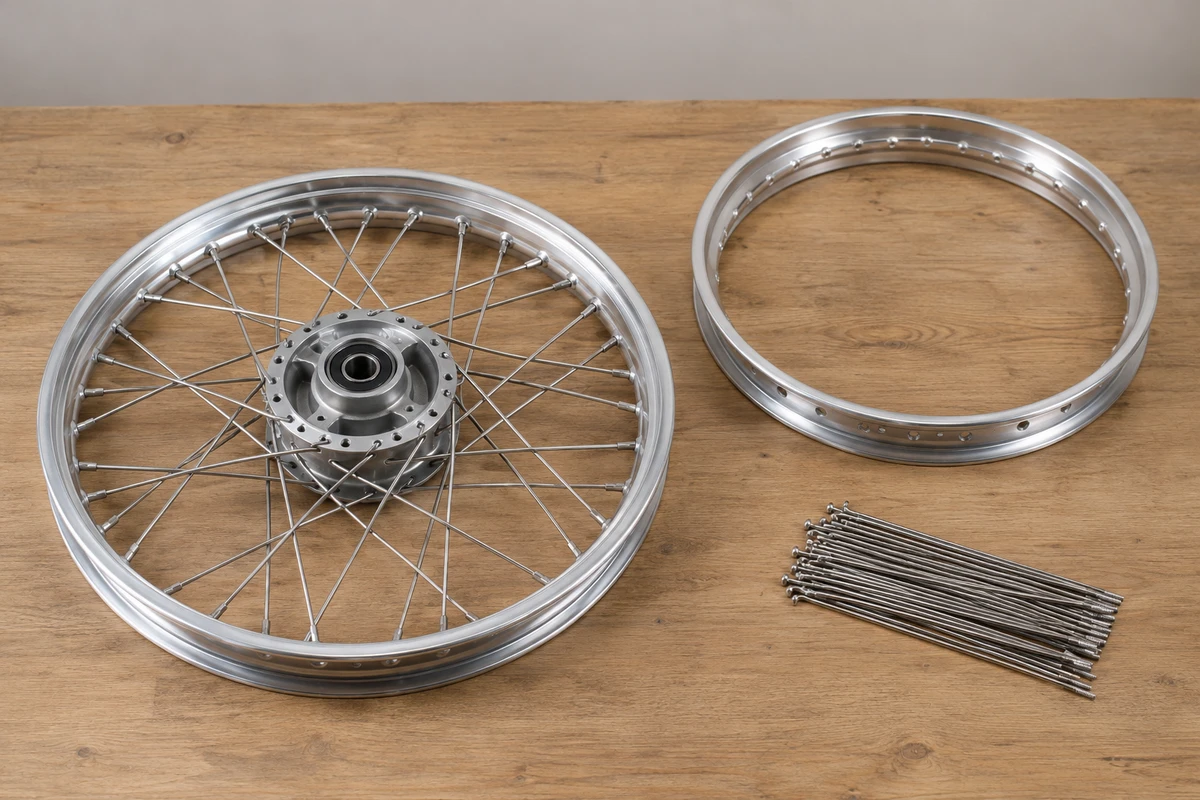
Compare loose wheel components and an assembled-wheel offer only after defining the same professional-service endpoint. A component carton delivered to a local wheel builder is not the same deliverable as an assembled wheel returned to the buyer. Neither description necessarily includes every later task the buyer needs.
Start with an already approved wheel requirement and responsible technical provider. This comparison decides where the specified work is purchased and which goods move between providers. It does not select a rim, determine spoke compatibility or approve a completed wheel for use.
Write the finished scope in service terms
Name the approved hub, rim and spoke-group references, then ask the responsible wheel-work provider to identify its accepted output. Keep any tire-related or other later work explicitly included, excluded or separately proposed. Do not let assembled become shorthand for ready to install.
Buchanan's labor page separates parts from labor and lists wheel-building and additional services under distinct entries. Its terms also identify a packaging charge specifically for a complete wheel. These named-shop observations, checked on 14 October 2026, show why neither the work nor the shipment state should be inferred from a component price. They establish no charges for another supplier. Buchanan's labor and terms
Use the actual providers' current offers. An assembled proposal may still exclude a required task, while a local builder may decline a customer-supplied component. Both are facts to establish before comparing totals.
Map the components route
For local assembly, identify where each approved component is supplied and where it first travels. Ask the local professional whether it will accept that exact supplied scope and which information it needs. An available appointment or a general wheel-work rate is not acceptance of every hub and rim combination.
Obtain a written work quote against the approved requirement. Record any owner-supplied items and unresolved components, and ask which completion record the provider supplies. The purchasing worksheet should not fill an incomplete technical plan by selecting a missing part itself.
Include the actual onward movement from that provider to the buyer's agreed endpoint. If the owner will collect, record the real collection arrangement rather than treating it as a supplier-paid delivery service. Keep unpriced resource demands visible without inventing a monetary allowance.
Map the assembled-wheel route separately
For the remote assembly option, ask what goes to the builder and what returns. A buyer-owned hub may create an outward leg even though the rim and spokes are purchased there. Alternatively, the provider may supply every component. Those are different commercial proposals.
Request actual packed data for the returned assembly. Do not apply the component carton's dimensions to the wheel, or predict savings from the loose parts' net weight. Ask the provider to identify the packing and transport services included in its offer and any stated extra charges.
Confirm the recipient's handover responsibility. A returned assembled wheel may still need a separately accepted technical step. That remaining work belongs in the comparison if it is part of the buyer's defined endpoint; it should not appear only after the cheaper-looking option has been chosen.
Fictional example: the hub travels in only one option
A fictional buyer already owns approved hub H-4. Option L supplies the other approved components to a local builder, whose quoted service ends at an identified wheel-work stage. Option R requires H-4 to travel to the remote builder and returns an assembled wheel at the same stage.
The buyer includes H-4's outward journey in R, the component delivery in L, and each option's actual final handover. If one offer includes a later task that the other excludes, the buyer requests alignment or retains the difference explicitly. No assumed assembly fee or freight saving is inserted.
The comparison can now answer a concrete question: which available route completes the same approved work with a clear owner for every handover? If the local builder has not accepted the components, L remains a proposal, however attractive its freight subtotal looks.
Buyer worksheet
| Record | What to establish |
|---|---|
| Approved requirement | Exact component references and authorized technical basis |
| Common service endpoint | Specific completed work and explicit exclusions |
| Local route | Component delivery, accepted local work and onward movement |
| Remote route | Buyer-owned items sent out and assembly returned |
| Packed states | Independent data and offers for components and assembled wheel |
| Unowned task | Any required work without an accepting provider or quote |
This is an original purchasing worksheet. It does not authorize physical work, establish legal treatment or replace a provider's assessment.
Bring the unresolved decision to the right provider
See Motorcycle parts for product context. A Motoparts sourcing request can identify the exact item and unanswered supplier question. Motoparts provides independent aftermarket and unbranded buying coordination and supplier negotiation. The named businesses above are documentary examples, not affiliations, branded-product offers or a promise that Motoparts supplies their services.
The initial form accepts a supported marketplace HTTPS link, an 8–1200-character description, or screenshots: up to five PNG, JPEG, WebP or GIF images, no more than 10 MiB each and 20 MiB combined. Other files need a separately agreed authorized exchange; the form is not a PDF, CAD or ZIP portal.
Frequently asked questions
Are loose components always cheaper to ship than an assembled wheel?
No universal saving is established. Obtain actual packed data and accepted transport quotes for both states, then add the professional work and movements needed to reach the same endpoint.
Does assembled mean tire mounting and balancing are included?
Do not infer those services. Ask the actual provider to define its output and all included or excluded work. The comparison itself supplies no technical completion standard.
What if I already own the hub?
Identify whether it remains with the local provider or must travel to the remote builder. Include any actual outward and return scope without pricing the same movement twice.
Can a generic local wheel-work price complete the comparison?
Only if the provider confirms the exact proposed components and work. A general rate does not establish acceptance, required additional parts or the final handover scope.
Sources
Discuss a sourcing request related to this article.Wheel Parts or an Assembled Wheel: Compare the Same Service Endpoint