
AGM Stock Reorders: Separate Shelf Counts from Maintained Supply
Reconcile activated AGM shelf stock with current maintenance and qualified disposition records before treating it as demand coverage.
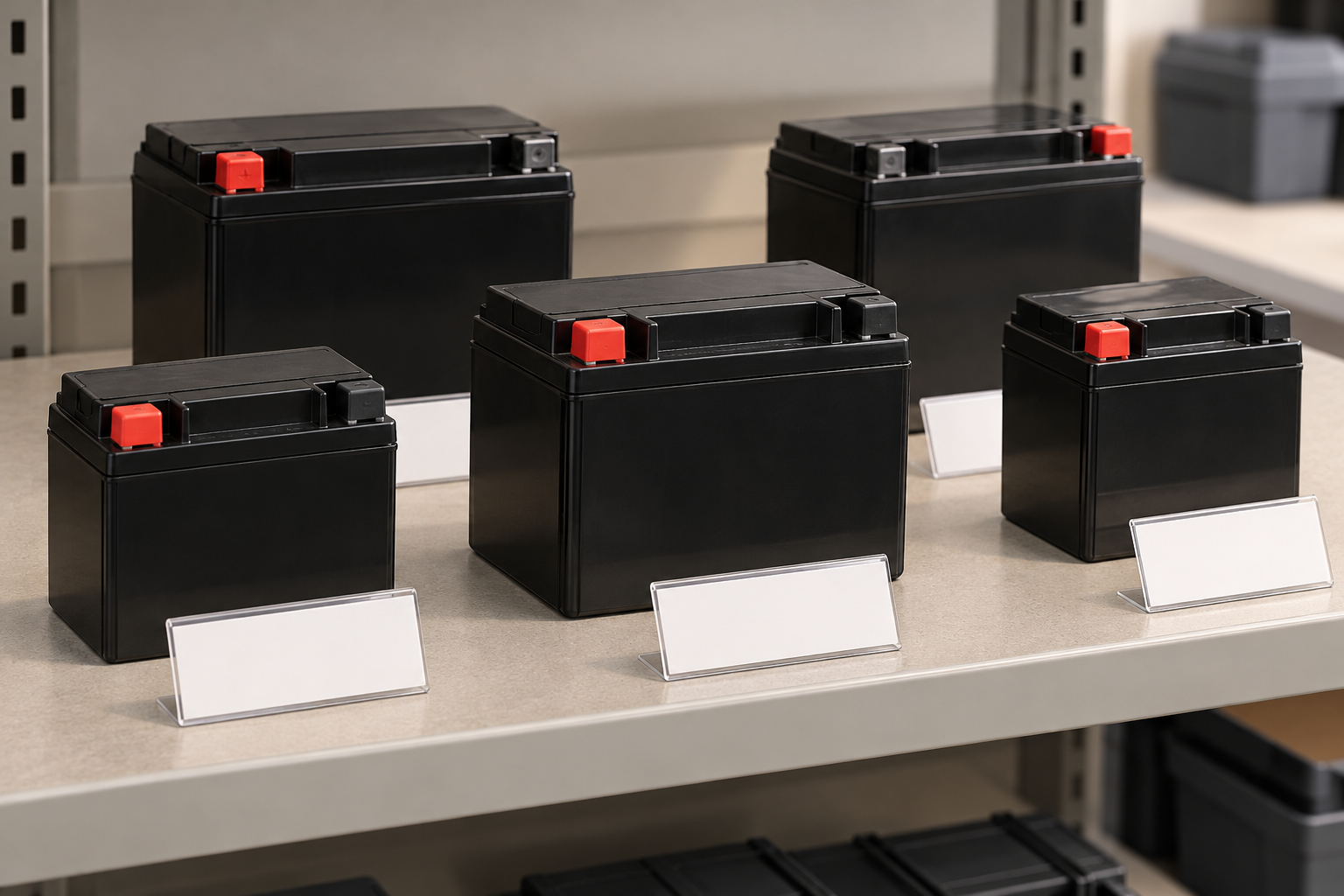
Eight activated batteries on a shelf do not necessarily cover six upcoming requirements. Inventory quantity, known supply state and current qualified disposition answer different questions. The reorder should show all three without treating missing maintenance evidence as either automatic readiness or automatic scrap.
This article addresses known activated AGM stock after receipt. It supplies no charging recipe, voltage threshold, activation procedure or battery test.
Preserve the state through storage
Yuasa's shelf-life guide explains that an idle battery loses charge over time. Used narrowly here, that observation makes storage history relevant to the purchasing record; it establishes no universal shelf-life duration or readiness rule. Yuasa battery shelf-life discussion
Retain the exact battery reference and its documented activation state. Do not merge known activated units with unactivated bottle-supplied stock under a common AGM total. Manufacturing, activation, receipt and maintenance dates should remain separately labeled when known; a recent delivery date cannot recreate an earlier maintenance history.
Locate the accountable maintenance and disposition records
For each identifiable unit or accountable stock group, record who is responsible for the applicable storage maintenance and where its history is retained. Import the current qualified disposition for the intended requirement, including any limitations. Purchasing should not perform an electrical check to replace a missing record.
A documented maintenance event and a release decision are different facts. Retain their actual wording rather than shortening either to battery good. If the record cannot be connected to the unit, keep that association unresolved. The best-documented battery should not lend its status to every similar unit on the shelf.
Distinguish confirmed gaps from unresolved potential supply
Apply stock with supported eligibility to the defined demand and show unresolved units separately. Those units may later affect the gap after an accountable decision; they are not guaranteed incoming coverage and should not be written off merely to simplify purchasing.
Ask the owner whether the uncertainty can be resolved before the buying decision. Where a purchase must be considered sooner, show the consequence if the existing units are later released, including possible excess stock. Obtain actual supplier availability and the ordered supply state rather than assuming new arrivals will be immediately ready.
Fictional example: four released, four unresolved
Six fictional requirements concern one approved activated AGM reference. The shelf record contains eight matching units. Four have current qualified eligibility for the defined allocation; four have unresolved maintenance and disposition evidence. Confirmed coverage is four, leaving two requirements without supported stock coverage.
A proposal to buy two more must retain the four unresolved units in the accompanying record. It should not describe them as failed or discarded. If two later receive an applicable release before the required date, the immediate purchase gap can close; if the purchase has already been authorized, any surplus needs a separate commercial decision.
If the supplied evidence concerns a different battery state or another lot, it does not resolve these four units. Preserve the unit association and ask for the correct record. Should a potential hazard interrupt ordinary records work, use the established qualified response rather than gathering extra observations for this worksheet.
Reorder worksheet
Use this original purchasing aid with the actual approved records. It does not supply a test, installation method or technical acceptance.
| Field | Record and decision basis |
|---|---|
| Battery reference and state | Exact reference and documented activated state |
| Shelf entry date | Separate receipt, activation and other known dates |
| Maintenance responsibility | Accountable storage-maintenance owner and history |
| Current qualified disposition | Unit-linked current qualified eligibility or unresolved state |
| Eligible allocation | Demand allocation supported by that disposition |
| Unresolved units | Units awaiting evidence, with purchasing consequence visible |
Request the identified replenishment
See Motorcycle parts for category context. In a Motoparts sourcing request, identify the approved product, outstanding quantity and exact supplier question. Motoparts provides independent aftermarket and unbranded buying coordination and supplier negotiation. Named manufacturer examples are documentary references, not branded supply offers, affiliations or evidence of another supplier’s capability.
The initial form supports a supported-marketplace HTTPS link, an 8–1200-character description or screenshots. Image limits are five PNG, JPEG, WebP or GIF files, 10 MiB each and 20 MiB combined. PDF, CAD and ZIP files require a separately agreed authorized exchange. A request supplies no engineering approval, guaranteed saving or delivery commitment.
Frequently asked questions
Does a recent receipt date prove activated stock is ready?
No. Receipt, activation, maintenance and qualified disposition are separate records. Retain their actual dates and associations; delivery timing cannot establish the battery’s current condition.
Are batteries with missing maintenance records scrap?
No such conclusion follows. Keep them as unresolved potential supply pending the appropriate qualified decision. Do not count them as ready or discard them through a purchasing calculation.
Should purchasing test or charge stock to close the gap?
This method authorizes neither. Refer the exact unit and missing evidence to the responsible qualified provider using the applicable product instructions. No test threshold or charging procedure is supplied here.
Can a two-unit gap disappear without buying?
It can change if previously unresolved stock receives a supported applicable disposition in time for the demand. Record that evidence and recalculate; do not assume the outcome or cancel an existing commitment without authorization.
Sources
Discuss a sourcing request related to this article.AGM Stock Reorders: Separate Shelf Counts from Maintained Supply