
Fork Reorders: Separate Bushing Demand from Seal-Service Counts
Reconcile fork-service history into separately approved bushing and sealing demand instead of repeating every historical fork-kit count.
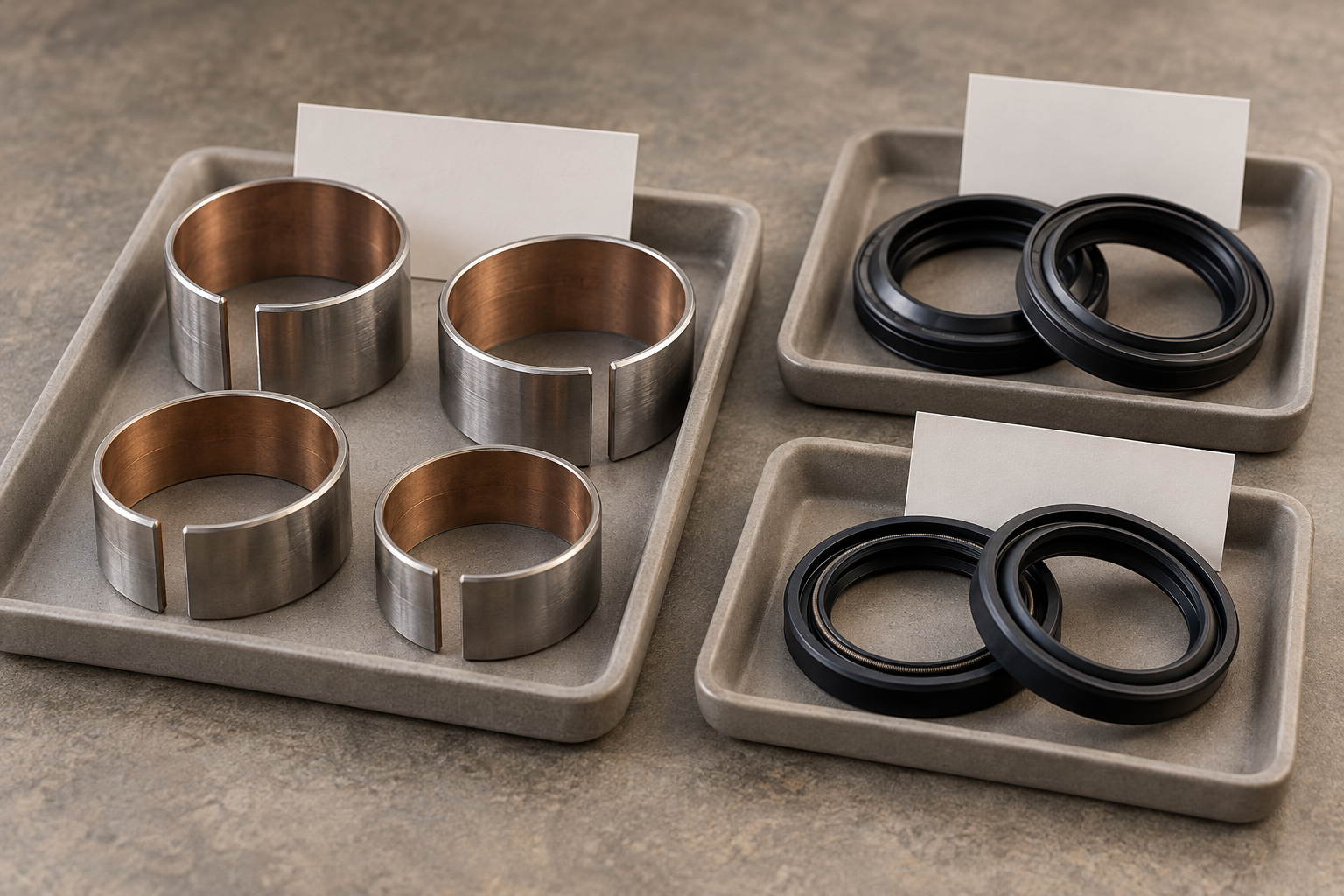
A workshop's five seal-service entries do not automatically justify five bushing-kit purchases. The reorder must follow the actual authorized bushing requirements within those events, while preserving separately required oil and dust seals.
This is a demand-history reconciliation after the service scopes have been approved. It does not diagnose suspension wear, set replacement intervals or decide whether any existing part can remain in service.
Keep the product groups distinct
All Balls Racing's fork range separately describes seals and bushing kits, with the bushing description also naming ancillary components. A range page establishes product-group distinctions; it does not provide the current bill of materials for every SKU. All Balls fork seals and bushings
Retain the actual installed fork reference with every event. The motorcycle's original model may no longer identify that fork. Import the approved bushing, oil-seal and dust-seal requirements from the responsible provider instead of using a generic fork kit entry as the specification.
Explain what a historical kit issue represented
Trace ambiguous kit entries to their picked references or accountable service records. One entry may record a seal group, another a bushing package, and another a complete approved basket. Do not interpret all three as identical bushing consumption simply because the ledger uses one label.
Separate purchase history from issue history. Five kits received are not proof of five completed bushing events; some may still be on hand or allocated elsewhere. Similarly, do not add component issues to their parent kit issue if they describe the same work. Keep unresolvable history out of a precise consumption claim.
Aggregate the already approved service scopes
Build one row per authorized event and fork application, then count the required groups. Apply matching eligible stock to each group once. An oil-seal requirement should not absorb a bushing kit's O-ring entry merely because both names relate to sealing.
For the current inquiry, request separately itemized offers for the resulting gaps. A combined package may be considered if its actual contents answer the approved demand, but the surplus bushing or sealing groups should remain visible. The seller's bundle does not establish that every future seal job will need its bushings.
Fictional example: five seal events, two bushing events
Five fictional upcoming service events have an approved seal-group requirement. Only two of those events have an authorized bushing-group requirement. Assume no eligible matching stock for either group. The starting demand is five approved seal groups and two approved bushing groups, with actual references kept separate by fork application.
If a seller proposes five combined packages, each containing one of each required group, the example would produce three bushing groups beyond current approved need. This is an invented common-application case, not a statement of actual kit contents or service practice.
A later technical revision adding a bushing requirement to another event changes demand to three bushing groups. A historical average or a bundle discount cannot make that revision for the provider. Preserve the event-level change so the next reorder can distinguish a changed service scope from an accounting correction.
Reorder worksheet
Use this original purchasing aid with the actual approved records. It does not supply a test, installation method or technical acceptance.
| Field | Record and decision basis |
|---|---|
| Installed fork | Actual installed fork reference and application record |
| Authorized service event | Unique event and controlling authorized scope |
| Bushing requirement | Required bushing group, including approved quantity basis |
| Oil and dust seal requirement | Oil and dust sealing requirements kept separately identifiable |
| Actual issue history | Picked references reconciled to ambiguous kit entries |
| Separate reorder lines | Current gaps by approved group and actual offer contents |
Request the identified replenishment
See Dirt bike parts for category context. In a Motoparts sourcing request, identify the approved product, outstanding quantity and exact supplier question. Motoparts provides independent aftermarket and unbranded buying coordination and supplier negotiation. Named manufacturer examples are documentary references, not branded supply offers, affiliations or evidence of another supplier’s capability.
The initial form supports a supported-marketplace HTTPS link, an 8–1200-character description or screenshots. Image limits are five PNG, JPEG, WebP or GIF files, 10 MiB each and 20 MiB combined. PDF, CAD and ZIP files require a separately agreed authorized exchange. A request supplies no engineering approval, guaranteed saving or delivery commitment.
Frequently asked questions
Should every seal-service event create a bushing order?
Only where the responsible provider has authorized that bushing requirement. Count the actual event-level scopes. A range description, past bundle or stock shortage is not a replacement interval or condition assessment.
How should old fork kit entries be used?
Reconcile them with actual picked references and service records before deriving group-specific consumption. Preserve unresolved entries rather than treating every generic label as one bushing kit.
Can an O-ring line satisfy the oil-seal demand?
Not from its name alone. Keep the exact approved sealing positions and references. The relevant provider must establish how actual offered contents answer them; a high component count is insufficient.
Does buying a combined package approve all its parts for use?
No. It is a commercial supply option with identifiable contents and possible surplus. Application and service scope remain governed by the responsible provider’s decisions, not the seller’s bundle.
Sources
Discuss a sourcing request related to this article.Fork Reorders: Separate Bushing Demand from Seal-Service Counts